Plenty of business owners now use AI to write blog posts, product pages and service pages. That is fine. Google is not banning AI content. But this week it made one thing very clear: a person has to check it before it goes live.
At the same time, Google is rolling out a spam update that has already moved traffic for some websites. Here is what changed, why it matters, and what to do this week.
What did Google change in its AI content guidance?
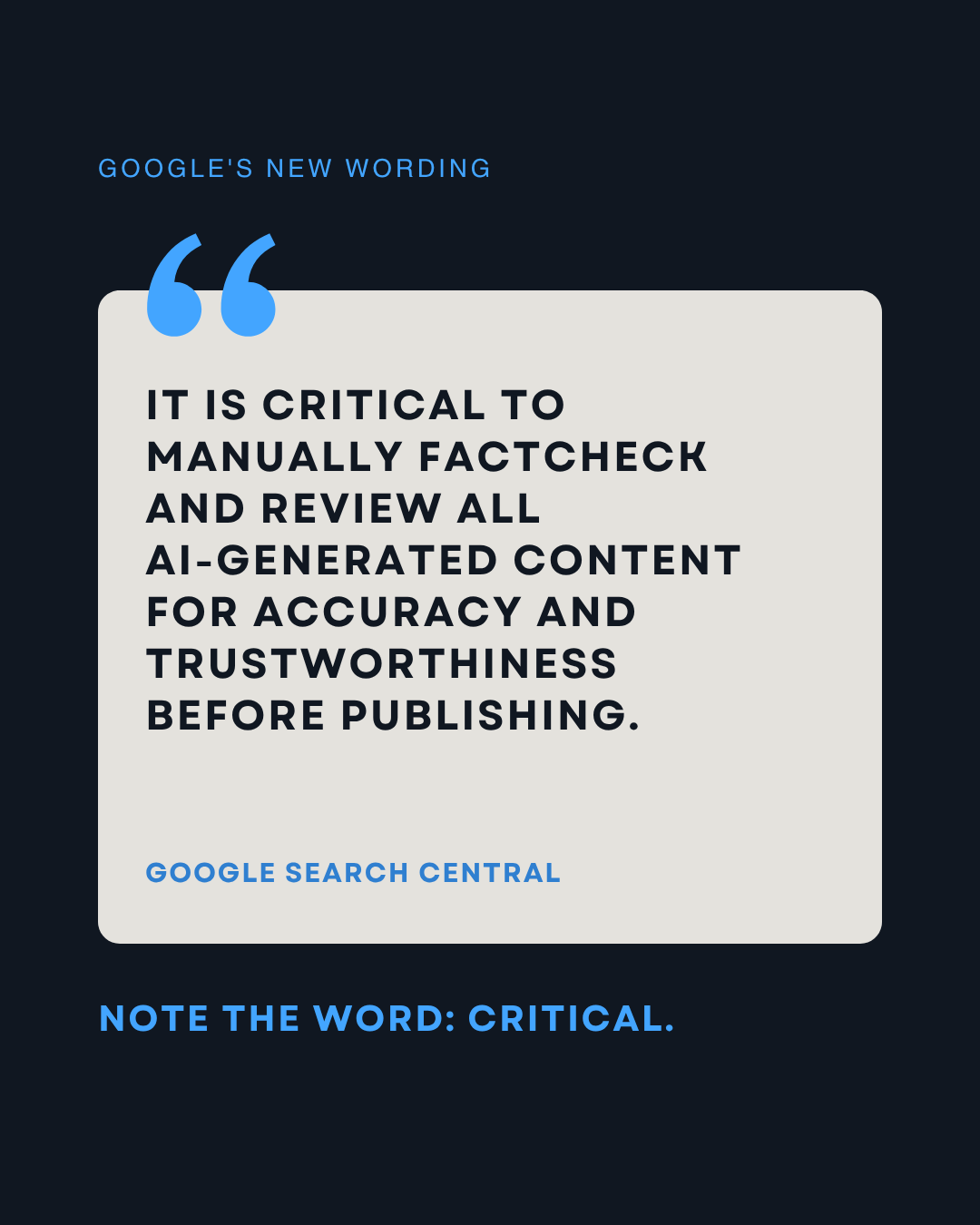
Google updated its developer guidance on using generative AI content, a help page on Google Search Central. The new wording reads: “It is critical to manually factcheck and review all AI-generated content for accuracy and trustworthiness before publishing.”
Barry Schwartz at Search Engine Roundtable spotted the change and pointed out that Google rarely uses the word “critical” in its search help documents. The previous version of this guidance dated from October 2025.
So the message is not “stop using AI.” It is “do not publish what nobody checked.”
Why does Google care so much about fact checking?
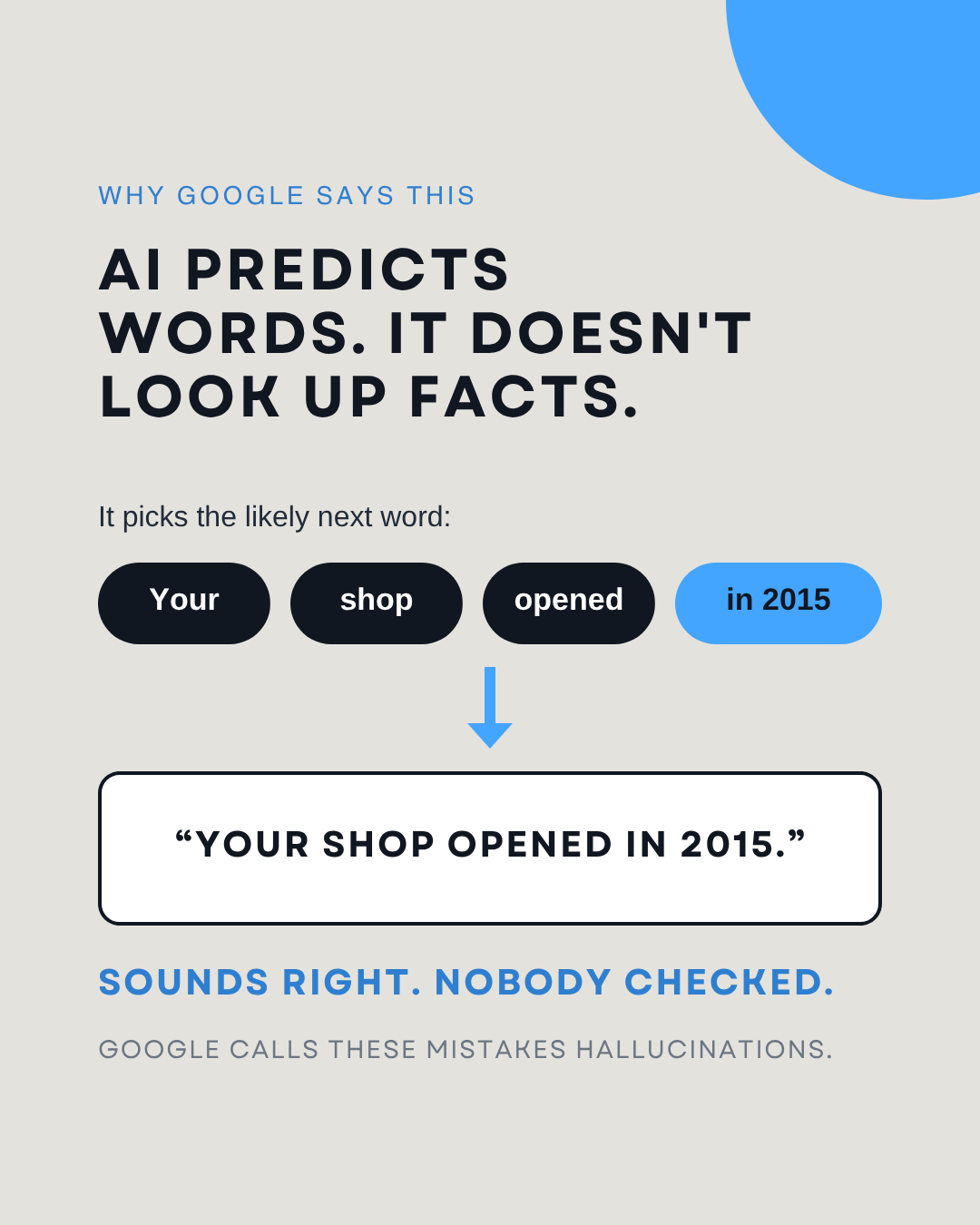
Google explains it in plain terms: “Generative models don’t retrieve facts, but predict a likely sequence of words based on their training data.” It adds that “generative AI outputs may contain inaccuracies (also known as hallucinations).”
In everyday words: an AI tool does not look anything up the way you would. It writes the sentence that sounds most likely. Most of the time that sentence is right. Sometimes it invents a date, a price, a statistic or a job title, and it says it with total confidence.
For a business, those small errors cost trust. A wrong opening year on your About page, an invented statistic in a blog post or a misspelled product name makes readers doubt everything else on the page.
What is happening with the September 2026 spam update?
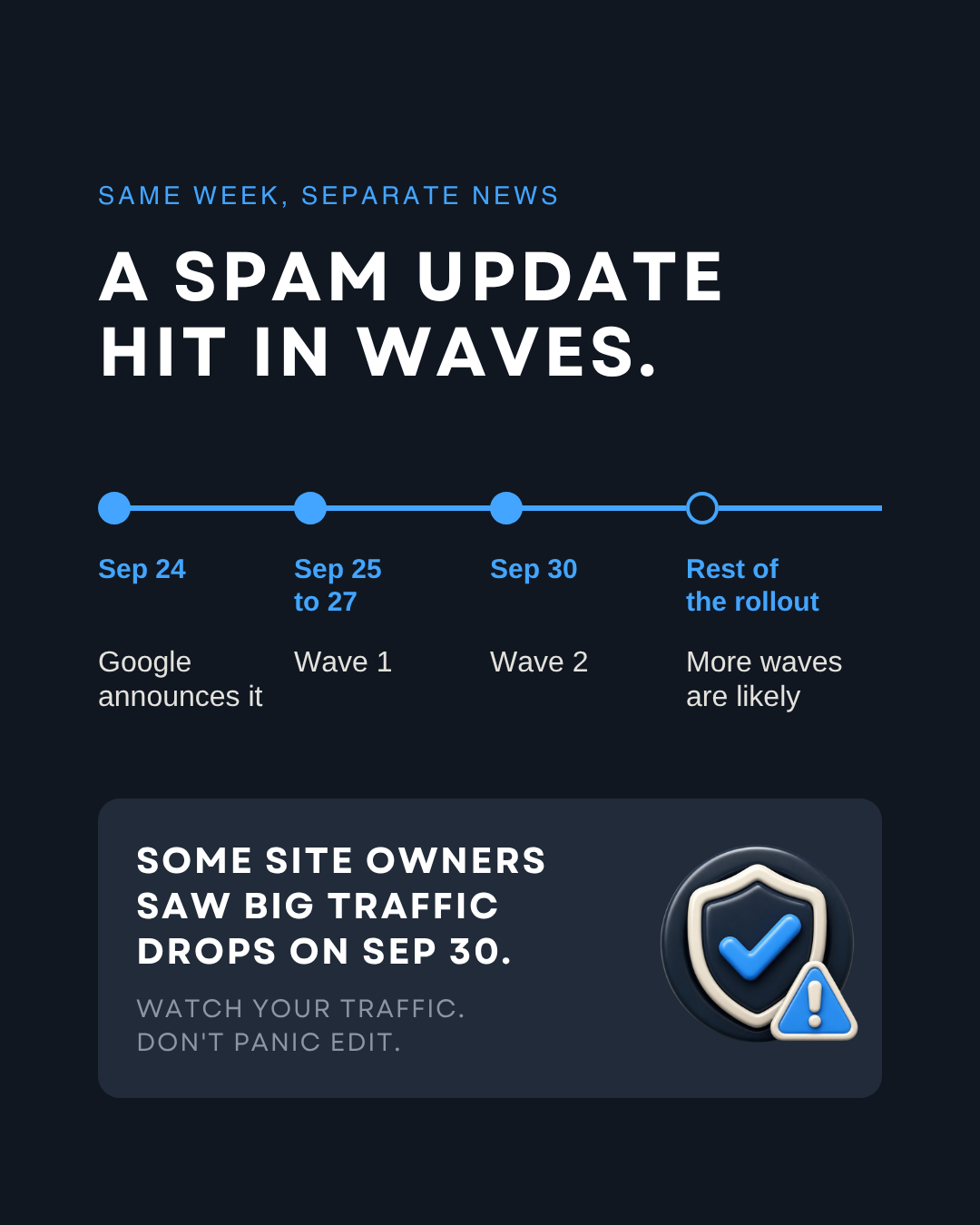
In the same week, Google is rolling out its September 2026 spam update. Google announced it on September 24 and said the rollout would take two weeks, which is longer than usual.
The impact has come in waves. Phase one hit between September 25 and 27, and phase two landed on September 30 and ran into October 1. More phases are likely before the two weeks are over. SEO consultant Glenn Gabe reported that several site owners saw significant traffic drops on September 30, and webmasters also reported swings in Google Discover and Google News traffic.
To be clear: Google has not tied these two events together. The guidance change and the spam update are separate pieces of news that landed in the same week. Still, together they are a useful reminder about quality.
What should you check before you publish AI content?
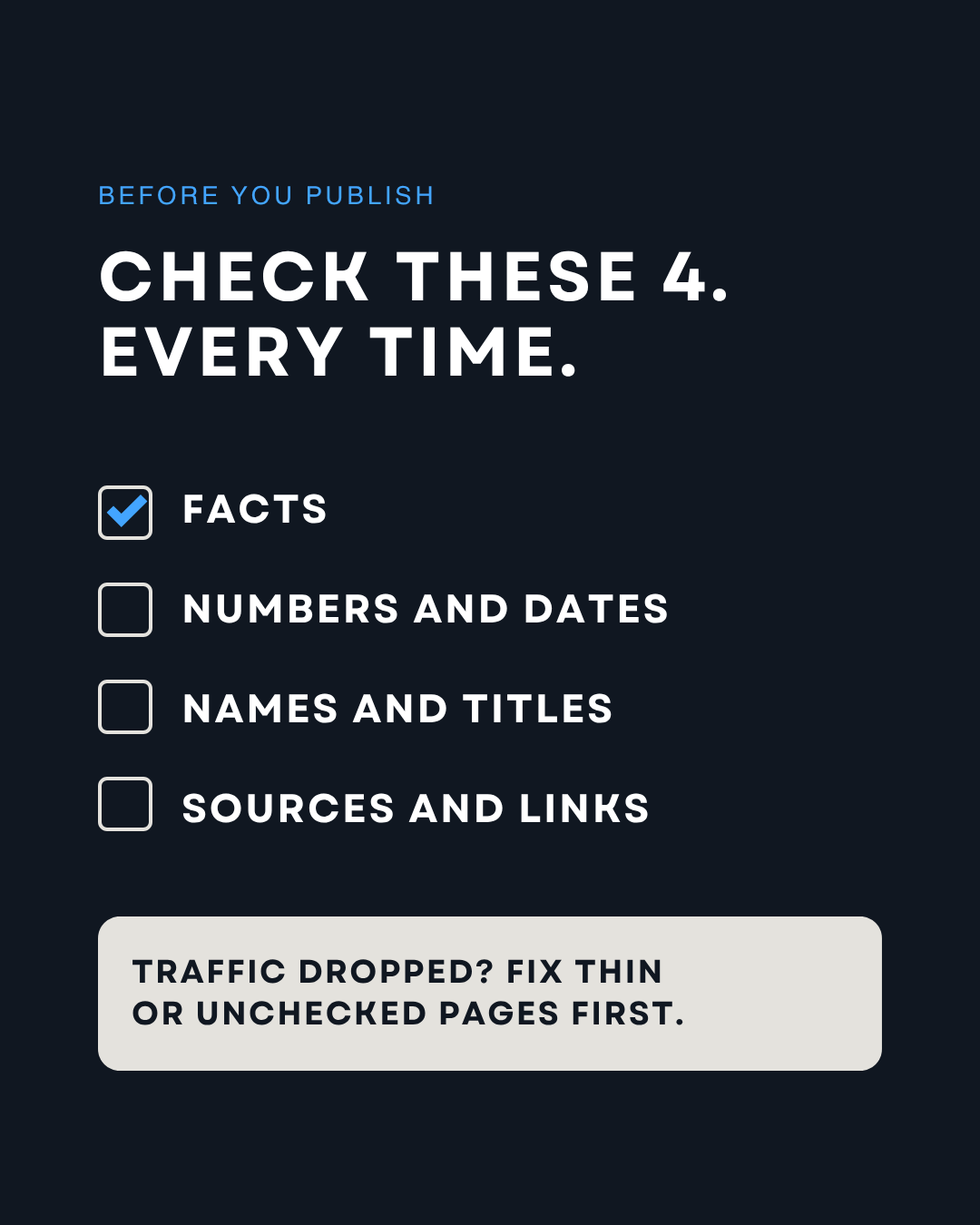
Use AI for the first draft if it saves you time. Then have a person review four things before anything goes live:
- Facts. Is every claim true? If you cannot confirm it, cut it.
- Numbers and dates. Prices, percentages, years and opening hours must match a real source.
- Names and titles. People, companies, products and job titles must be spelled and described correctly.
- Sources and links. Every source named in the text must exist and say what you claim it says.
A simple habit helps: keep the source open next to the draft while you review, and mark each claim as checked. It takes minutes per page, and it protects your reputation.
What should you do if your traffic dropped this week?
First, do not panic edit. The spam update is still rolling out, and changing dozens of pages in the middle of it makes it harder to understand what happened.
Instead:
- Watch your numbers. Check Google Search Console and your analytics every day, and note which pages moved.
- Wait for the rollout to finish before you draw conclusions.
- Fix the weakest pages first. Look for thin pages with little real information, and AI pages nobody reviewed. Improve them with checked facts and useful detail, or remove them.
- Keep publishing carefully. Every new page should pass the four point check above.
The bottom line on AI content and SEO
AI content and SEO can work together. Google’s message is about quality control, not about which tool wrote the first draft. The businesses that do well here use AI to move faster and keep a person responsible for every fact that reaches their customers.
If you are not sure whether your site would pass that check, start with your ten most visited pages. Read them as a customer would, and verify every fact, number and name.
Want a second pair of eyes on your website and content? At 33 Genesis Road, we offer a free audit of your business, delivered in less than 24 hours. Request it on our free audit page, or message us on LinkedIn or Instagram. For more lessons like this one, join our free weekly newsletter. You can also see how we work on our services page.
Sources: Search Engine Roundtable, “Google Updates AI Content Guidelines: Manually Factcheck & Review AI-Generated Content” (October 1, 2026); Search Engine Roundtable, “Phase Two Of The Google September 2026 Spam Update Hits On 9/30” (October 1, 2026); Google Search Central, “Using generative AI content”.