Most brands pay to borrow attention. They buy a slot, run a short ad and hope people remember it. KFC UK and Ireland just tried something different. On September 30, it launched “Don’t Crack,” a 30 minute game show special where the contestants are not actors. They are 30 of its most devoted customers.
It sounds like a stunt. It is actually the latest step in a story the brand has been telling since 2024, and the numbers behind it hold a useful lesson for any business owner, whatever the budget.
Who is KFC, and what did it launch?
KFC is the fried chicken restaurant chain. This story is about its UK and Ireland business. Since 2024, its marketing has run under one brand platform, “Believe in Chicken,” created with the agency Mother.
“Don’t Crack” puts 30 real fans through four “tests of devotion.” The winner takes home £50,000 and the title of “Ultimate Believer.”
Why a few seconds of attention was not enough
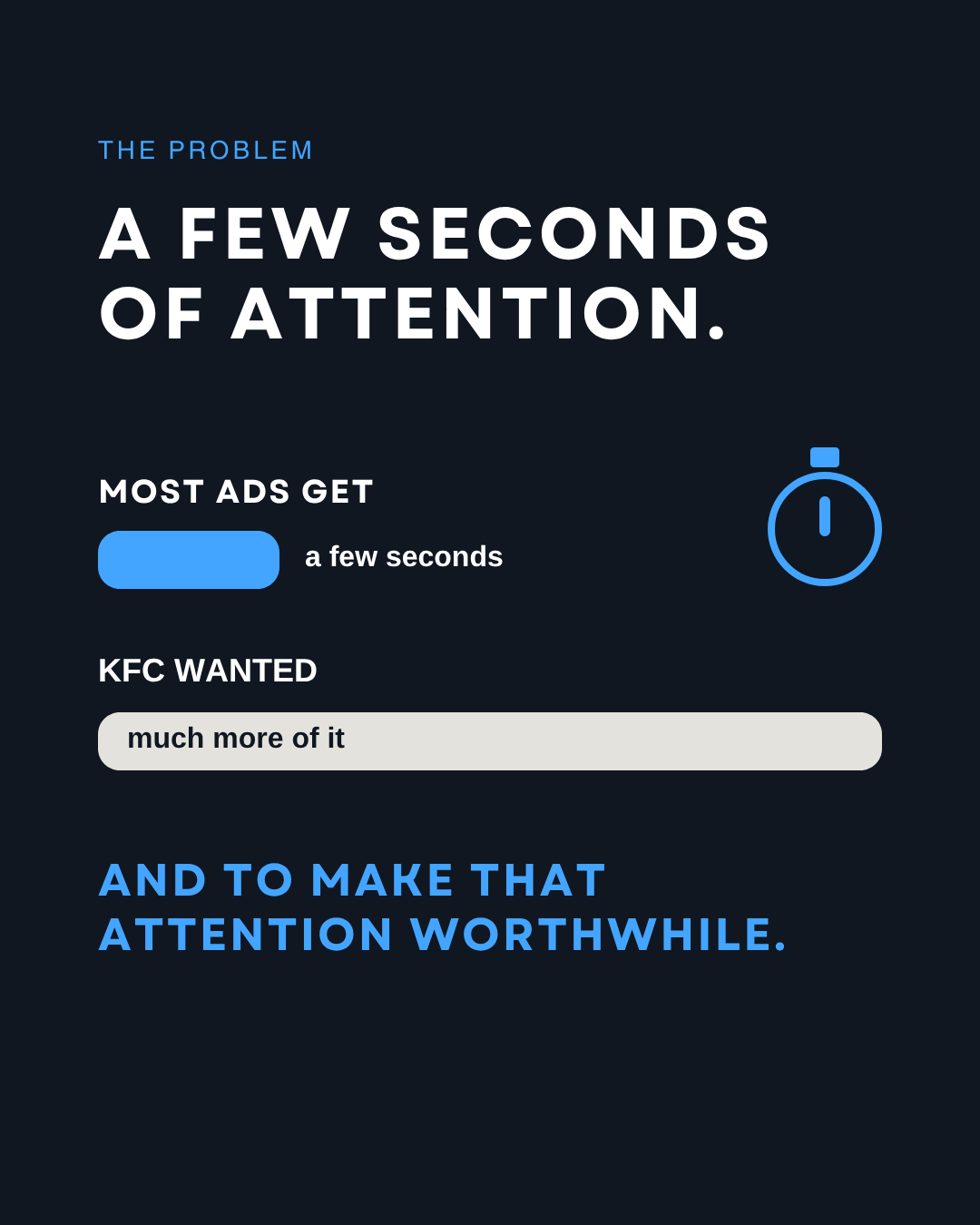
Monica Silic, chief marketing officer of KFC UK and Ireland, described the problem to Marketing Week: “We’ve previously been winning a few seconds of attention, yet this is about earning significantly more of it, and then making that attention worthwhile.”
That sentence describes most advertising. A short ad can be seen without being felt, and the brand pays again next month for the same few seconds.
Silic told Adweek the show runs for over 30 minutes rather than ninety seconds because that is how long it takes “before you genuinely care who wins.” The format was chosen to build an emotional stake, not just a view.
How KFC built its audience before the show
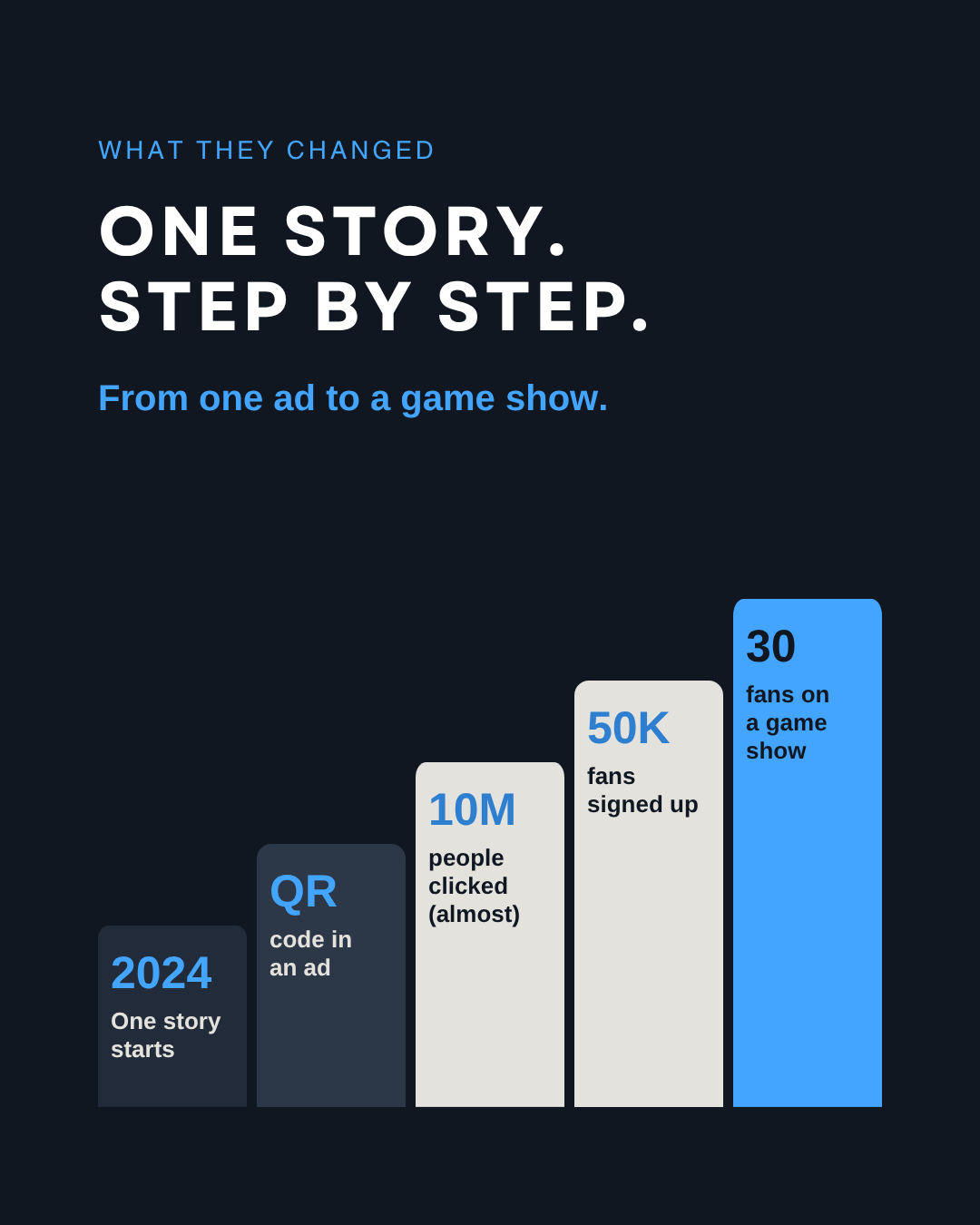
The game show is the end of a sequence, not the start. Here is the order:
- 2024: KFC commits to one story, “Believe in Chicken.”
- A campaign with a QR code: An earlier TV and social campaign, “How Much Do You Believe in Chicken?”, invited people to scan. Almost 10 million people clicked it.
- A sign up: About 50,000 fans signed up to take part.
- The show: 30 of those fans were chosen to compete on screen.
Silic put it plainly to Adweek: “We haven’t rented someone else’s audience for this. We’ve put our chicken-obsessive fans on screen.” The audience came from KFC’s own customers, gathered through its own campaign, and that is the part worth studying.
What the results show
Marketing Week reports these results for the “Believe in Chicken” platform so far:
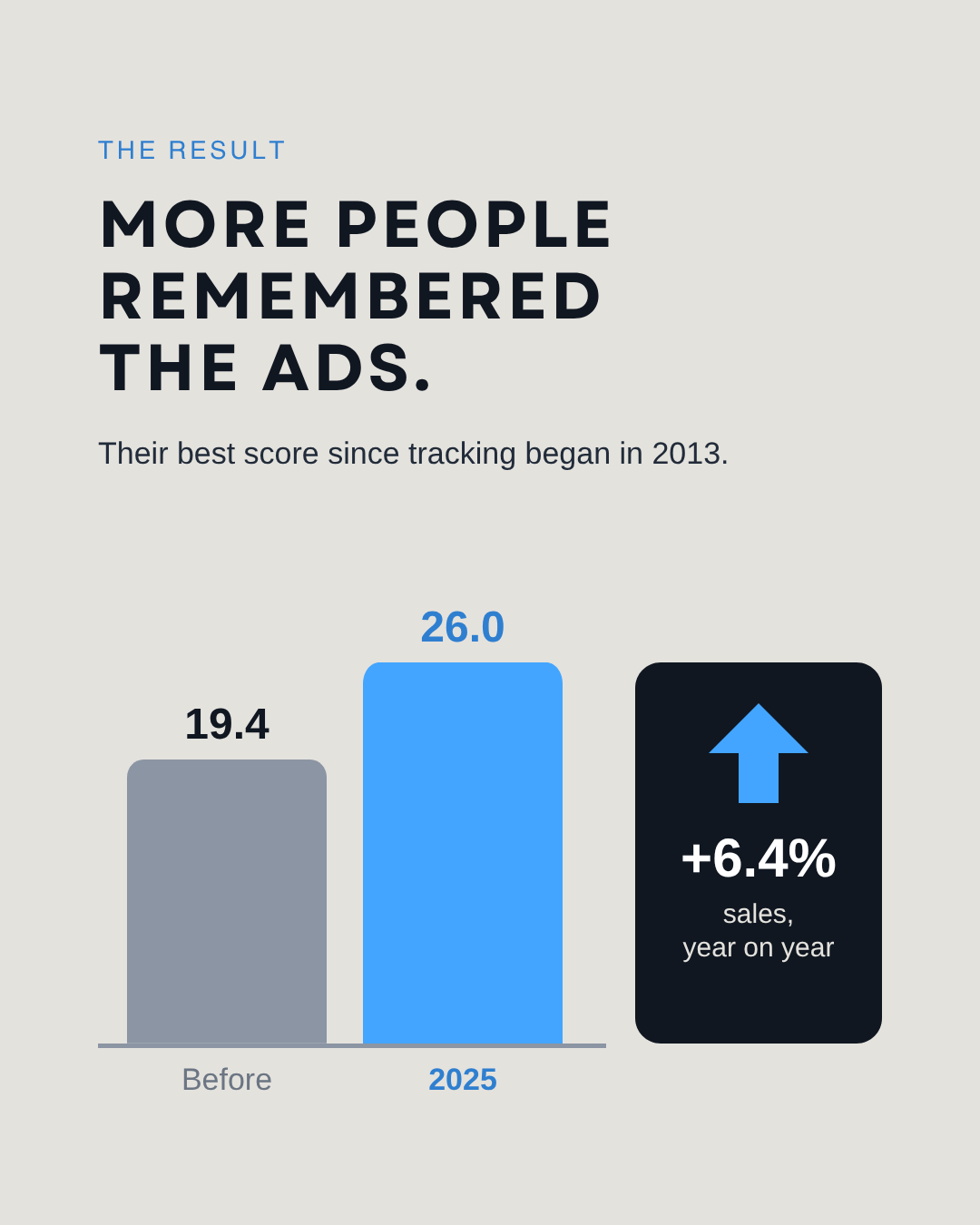
- More people remember the ads. KFC’s ad awareness score reached 26.0 in 2025, up from 19.4, the highest since tracking began in 2013.
- Sales grew. Net sales rose 6.4% year on year.
- The audience grew. Its TikTok following went from 100,000 to 1.8 million in 11 months.
- Products sold out. A “Pickle Mania” menu sold out and delivered a 7% overall sales lift.
One honest note: these figures describe the whole platform since 2024, not the game show alone, which only launched on September 30. The show is a reward for years of consistent work, not the cause of it.
How a small business can copy fan content marketing
Fan content marketing simply means putting your real customers at the center of what you publish, and giving them a reason to take part instead of just watch. You do not need a TV budget to use it. You need the same four parts KFC used.
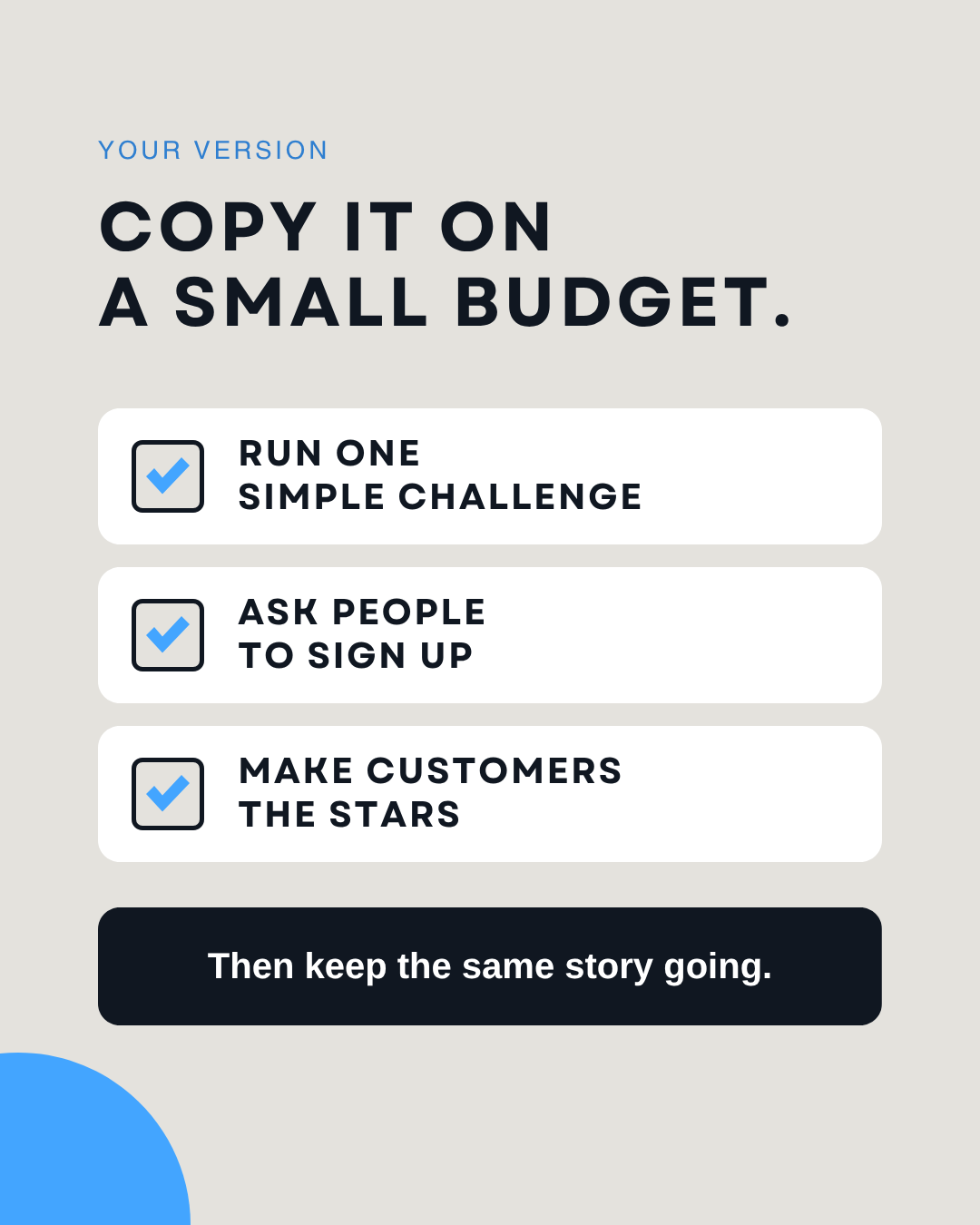
- One simple challenge. Give people something easy and fun to answer. A coffee shop could ask regulars for their favorite order. A gym could run a 30 day attendance challenge.
- A sign up step. Turn interest into a list. A form, a reply to an email or a comment keyword all work. KFC’s QR code did this job at scale.
- Real customers as the stars. Feature the people who took part: their photos, their stories, their results.
- The same story, again and again. KFC has been telling one story since 2024. Pick a theme that fits your brand and keep it for at least a year, so each new piece builds on the last.
Most small businesses do the opposite: a new idea every month and nothing for customers to join.
Where to start this month
Write down one question your best customers would love to answer about your product or service. Turn it into a simple challenge, add a way to sign up, and share the first three answers you get, with permission. Then repeat it next month, and the month after.
Attention you earn from your own customers compounds. Attention you rent disappears when the budget stops.
Want a second pair of eyes on how your brand earns attention? At 33 Genesis Road, we offer a free audit of your business, delivered in less than 24 hours. Request it on our free audit page, or message us on LinkedIn or Instagram. For more lessons like this one, join our free weekly newsletter. You can also see how we work on our services page.
Sources: Marketing Week, “‘Stepping beyond traditional advertising’: KFC on launching its own game show” (September 30, 2026); Adweek, “KFC Superfans Prove Their Devotion to Chicken in 30-Minute Game Show” (September 30, 2026).