Most AI news is about what the newest model can do. This week, the more useful story for business owners was about what AI costs.
On September 22, the two biggest AI labs cut their prices within hours of each other. If you decided earlier this year that automating part of your business was not worth the spend, this is the moment to look again.
What happened on September 22?
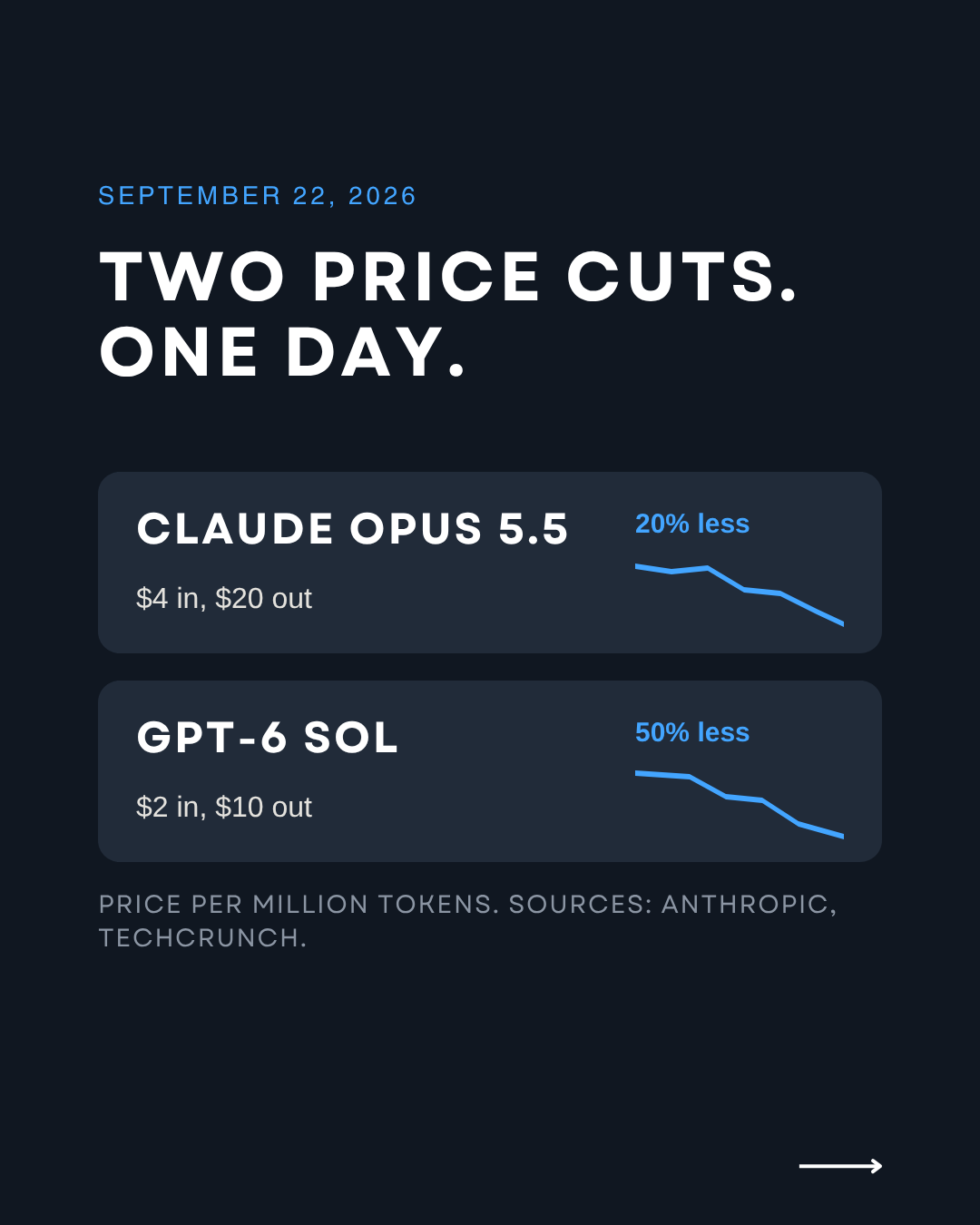
Anthropic released Claude Opus 5.5, its top model, at $4 per million input tokens and $20 per million output tokens. That is 20% below Opus 5. Anthropic says the new model costs 40% less to run on typical workloads and produces answers more than 30% faster. It also says smaller Sonnet 5.5 and Haiku 5.5 models are coming in the next few weeks.
About 90 minutes later, according to TechCrunch, OpenAI launched GPT-6 Sol and GPT-6 Luna. Sol costs $2 per million input tokens and $10 per million output tokens. Luna costs ten cents and fifty cents. OpenAI says both are half the price of its previous GPT-5.6 models, and Luna is also reaching free ChatGPT users in the desktop app.
If “tokens” means nothing to you, here is the short version: a token is a piece of a word, and a million tokens covers a lot of business writing. The exact number matters less than the direction. The same work now costs less.
Why do lower prices matter more than new features?
For most small businesses, AI projects stall for two reasons: nobody has time to set them up, and the running cost feels uncertain. Price cuts address the second problem directly.
When the cost per task falls, work that was borderline becomes worth automating. It also becomes easier to test. You can run an experiment for a few weeks without a large bill, see whether the output is good enough, and decide with real data.
There is a second effect. Many business tools, from email platforms to customer service software, run on these same models. When the models get cheaper, it becomes easier for those tools to offer AI features.
Which four tasks are worth revisiting?
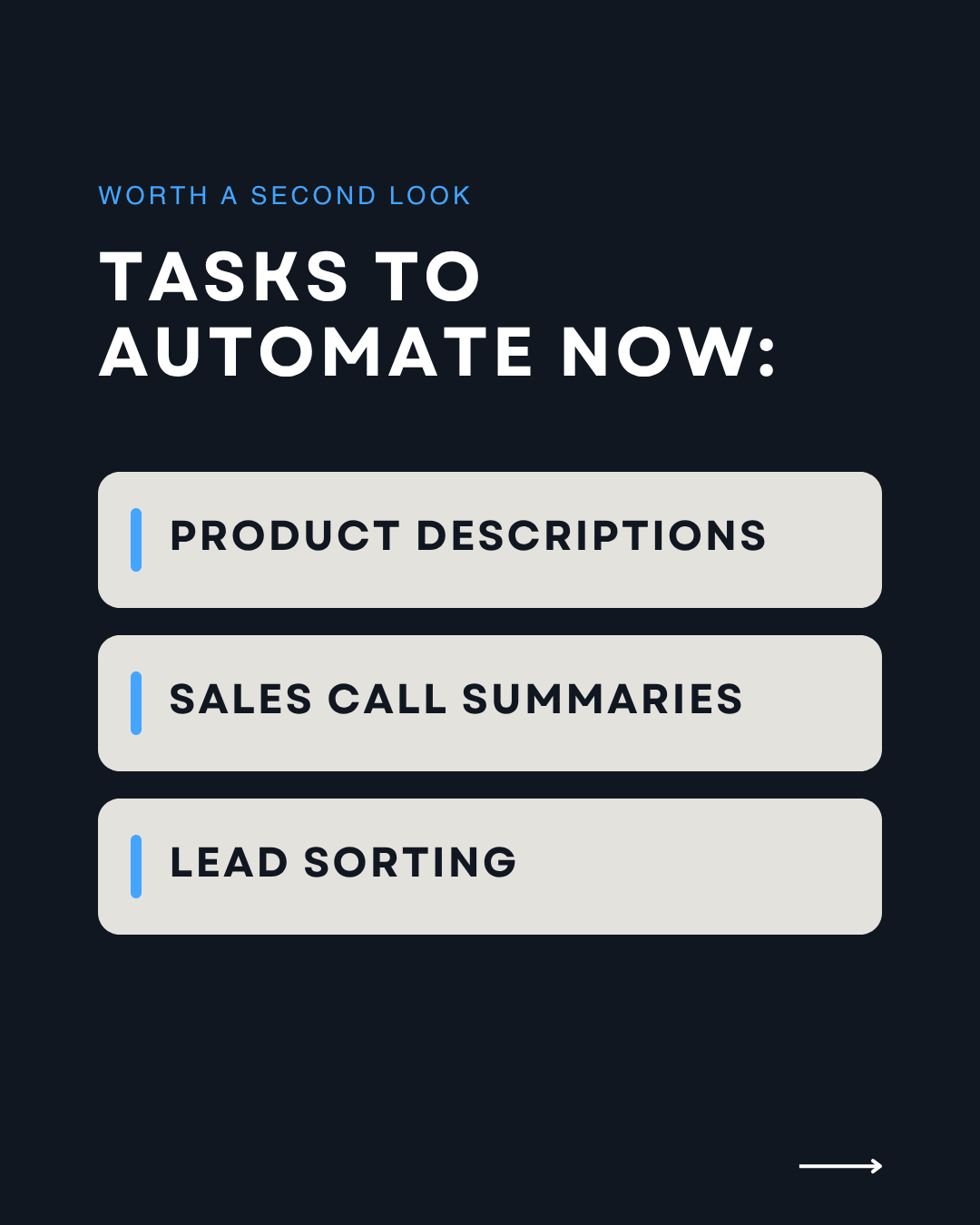
- Product and service descriptions. Generating first drafts for many listings is repetitive work that suits cheaper models.
- Call and meeting summaries. Turning recordings into action points is now a small cost per meeting.
- Lead sorting. Reading inbound forms and emails, then tagging them by intent or budget, saves hours each week.
- Support triage. Classifying customer questions and suggesting replies lets your team focus on the hard cases.
For each one, estimate how many times a month the task happens and how long it takes a person. That tells you whether the automation is worth building.
How do you stay flexible?
The lesson from this week is that prices and quality change every few months. A provider that is best today may not be best in spring. Three habits protect you:
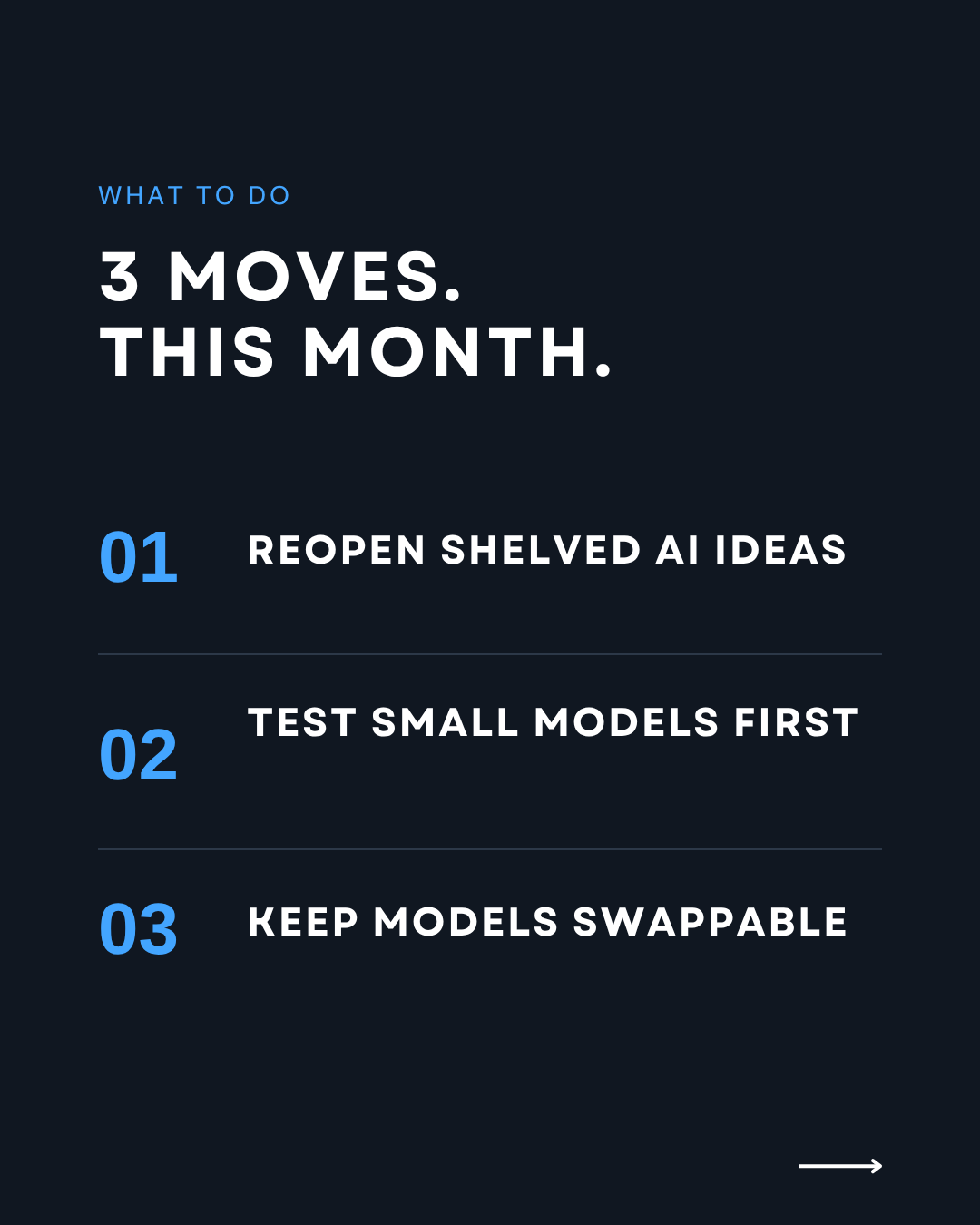
- Build workflows where the model can be swapped without rebuilding everything. Automation platforms like Make or Zapier make this easier.
- Start simple tasks on the cheaper models, and only move up when the output falls short.
- Review your AI spend and results every quarter, the same way you review ad spend.
Where should you start?
Pick one repetitive task that eats at least two hours a week. Test it with a lower cost model for a month. Measure the time saved and the quality. Then decide whether to expand.
The businesses that benefit most from falling AI prices are not the ones that wait for the perfect tool. They are the ones that test, measure and keep what works.
Want a second pair of eyes on where AI fits in your business? At 33 Genesis Road, we offer a free audit of your business, delivered in less than 24 hours. Request it on our free audit page, or message us on LinkedIn or Instagram. For more lessons like this one, join our free weekly newsletter. You can also see how we work on our services page.
Sources: TechCrunch, “OpenAI launches GPT-6 Sol and Luna” (September 22, 2026); TechCrunch, “Anthropic releases Opus 5.5 with lower prices” (September 22, 2026); Anthropic, Claude Opus 5.5 (September 22, 2026).