People are still buying this holiday season. They are just paying for it differently. New numbers from the US and the UK show shoppers who spend, worry and plan at the same time. For a small business, that changes how you build your holiday offers, and when you launch them.
What do the latest numbers say about holiday shoppers?
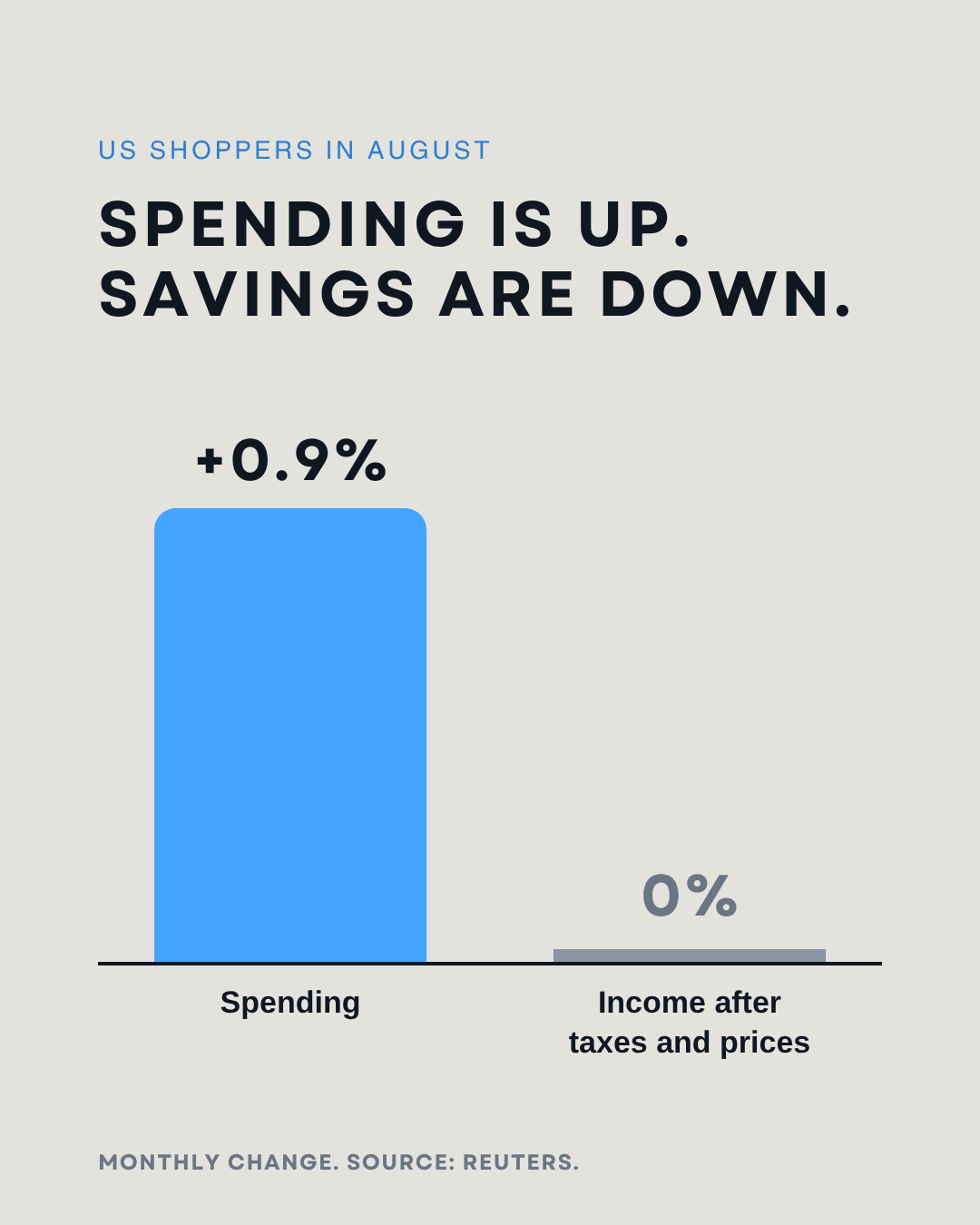
Start with the US. Consumer spending rose 0.9% in August, according to Reuters. After inflation, that is still a 0.6% increase. But income did not keep pace. Personal income grew 0.2%, and real disposable income, which is what people have left after taxes and price rises, was flat.
So where did the money come from? The saving rate fell to 4.1%, down from 4.6% in July. Reuters links the spending to stock market gains and to households drawing down their savings. Prices are still climbing too: the PCE price index, a key inflation measure, was up 3.4% over a year.
In plain words: people keep spending, but a growing part of it comes out of the cushion they had put aside.
How will people pay for their holiday shopping?
A PayPal survey of 2,005 US adults, reported by Payments Dive, adds the second half of the picture. 55% have used or considered buy now, pay later (BNPL), the option that splits a purchase into smaller installments. Among people familiar with it, 75% expect to use it for holiday shopping, up from 50% in PayPal’s 2025 survey.
The reasons are practical. 59% see BNPL as a way to “stretch and control their holiday budget”, and 42% say they are more likely to buy when it is offered.
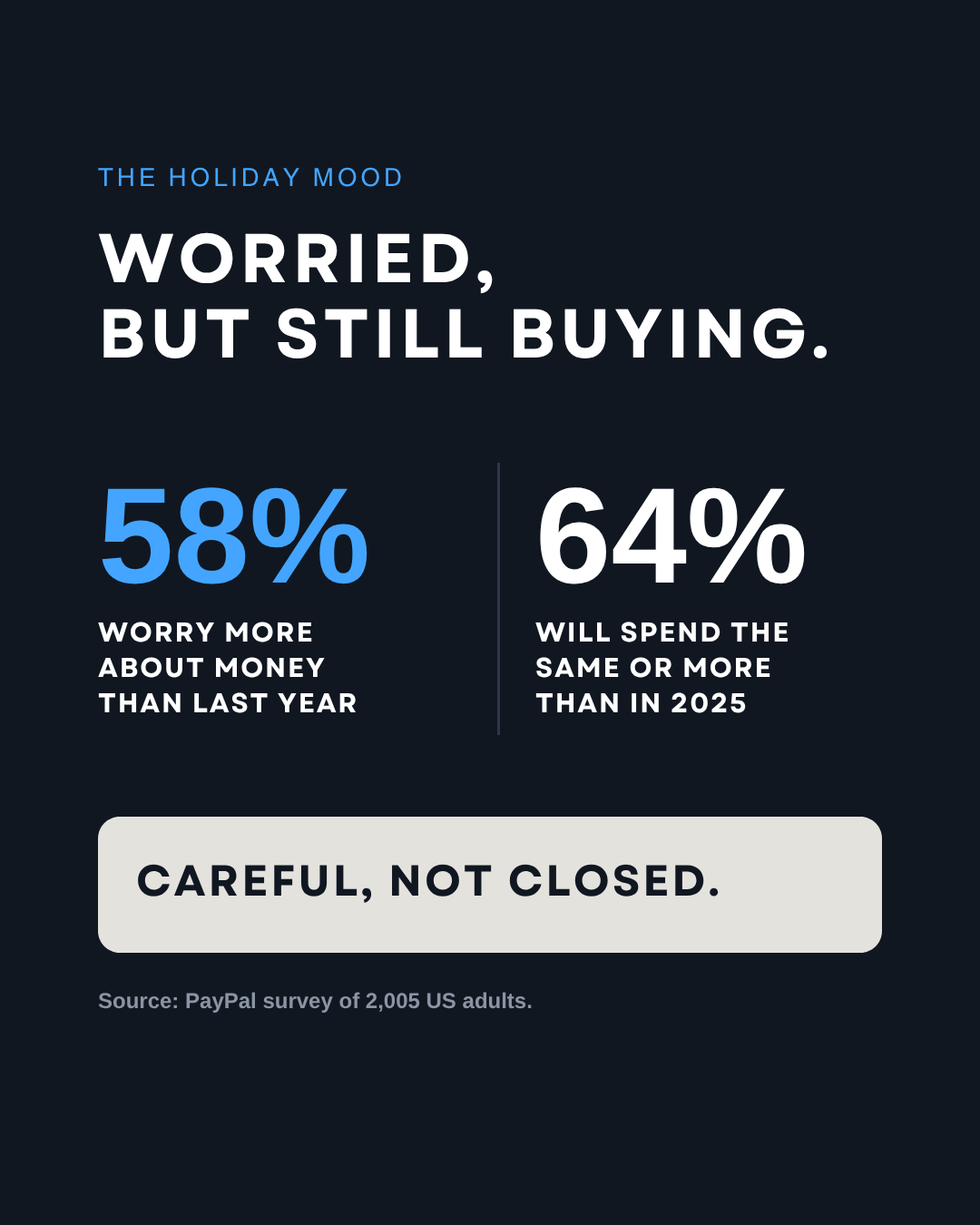
The mood is mixed. 58% are more concerned about their finances than last year, yet 64% expect to spend the same or more than in 2025. Frank Keller, president of checkout solutions at PayPal, put it this way: “Shoppers are starting earlier and taking a more intentional approach, looking for deals, rewards and cash back.”
What happens when budgets get tight?
The UK gives a preview. According to the BDO High Street Sales Tracker, reported by FashionUnited, UK discretionary retail sales fell 0.3% in September, compared with growth of 3.1% a year earlier. Online sales fell 1.1%, the weakest September outside the pandemic. The CBI reported that retailers cut order volumes at the fastest rate since its survey began in 1983.
BDO’s Sophie Michael said the sector is “entering the most important trading period of the year from an exceptionally fragile position.”
The lesson for business owners everywhere: selling online does not protect you when budgets tighten. When money feels short, every purchase gets more thought, whether people shop in a store or on their phone.
What should small businesses change in their holiday marketing?
None of this is a reason to cancel your holiday plans. It is a reason to adjust them. Here are four marketing moves that fit a careful, stretched shopper.
- Start earlier. PayPal says shoppers are starting earlier. If your best offer launches the week of Black Friday, a planner may already have spent their budget elsewhere. Announce your holiday offers sooner, and give people time to plan around them.
- Make value obvious. When money feels tight, people want to understand the deal in seconds. Bundle products that belong together, show the full price clearly, and say what the customer saves. Avoid vague promotions that make people do the math.
- Offer flexible payment, if your checkout supports it. With 42% of shoppers more likely to buy when BNPL is available, check what your payment provider already offers and make it visible on product pages and at checkout. This is a choice about clarity in your marketing, not financial advice to your customers.
- Talk to past customers first. People who already trust you need less convincing. Send your holiday offer to your email list and loyal buyers before you spend on ads to reach strangers. A thank you note, an early access window or a small reward can go a long way.

Where should you start this week?
Pick one product or service and build a simple holiday bundle around it. Write the price and the saving in one line. Then choose your launch date, and make it earlier than last year. Finally, draft the email you will send to past customers before anyone else hears about the offer.
Stretched shoppers are not gone. They are choosier. The businesses that win this season will be the ones that make the choice easy.
Want a second pair of eyes on your holiday plan? At 33 Genesis Road, we offer a free audit of your business, delivered in less than 24 hours. Request it on our free audit page, or message us on LinkedIn or Instagram. For more lessons like this one, join our free weekly newsletter. You can also see how we work on our services page.
Sources: Reuters via WTVB, “US inflation rises below expectations in August; consumer spending robust” (September 30, 2026); Payments Dive, “PayPal hints at BNPL holiday use” (October 2, 2026); FashionUnited UK, “September 2026 sees weakest UK retail performance since 2019” (October 2, 2026).