How to respond to leads from Facebook ads: reply fast, answer the exact question, include the price, and offer two specific times instead of asking when they’re free. If you run ads for clients who answer their own messages, send them a reply guide built from their real conversations.
Why does the reply decide whether the ads work?
Because the ad only starts the conversation; the reply decides whether the lead books. A slow or vague answer wastes the money spent to get that message, and the agency running the ads often takes the blame for leads that never had a fair chance.
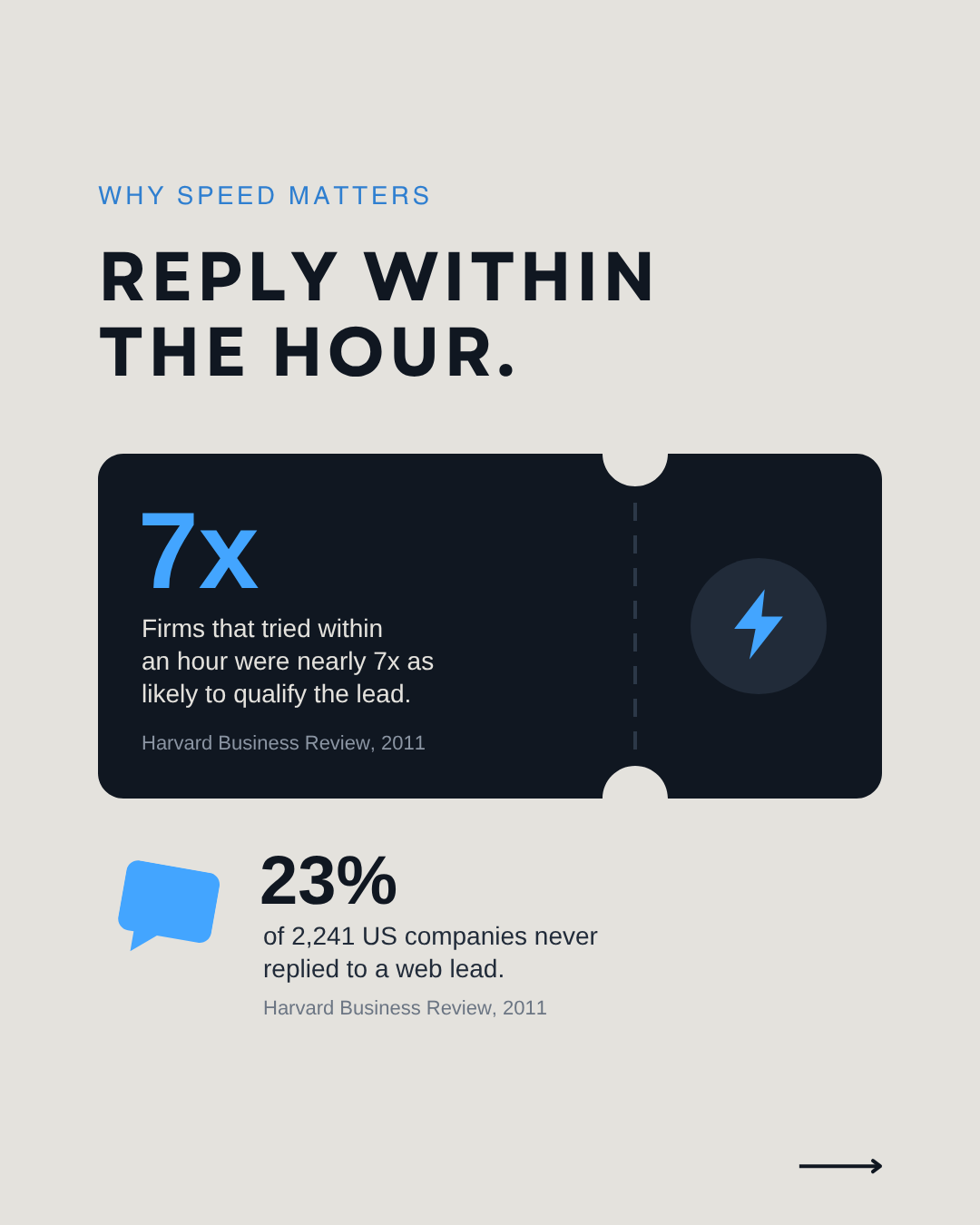
For a Harvard Business Review study (2011), researchers sent a web lead to 2,241 US companies: 37% replied within an hour and 23% never replied. In a separate analysis of 1.25 million leads, firms that tried within an hour were nearly seven times as likely to qualify the lead as firms that waited one hour more.
The often quoted “5 minute rule” comes from a 2007 InsideSales.com study with an MIT professor, based on calls to over 15,000 web leads: the odds of reaching a lead were 100 times lower at 30 minutes than at 5. It is old, phone based and run by a software vendor, so read it as a direction. Platforms measure this too: Google says responsiveness to customer inquiries affects how its Local Services Ads rank.
What goes in a client reply guide?
Ready replies for every question their leads ask, for every service they sell, written from their own past messages. The client copies, pastes, changes the date and time, and sends. Each reply matches how that business already sells, so it sounds like them.
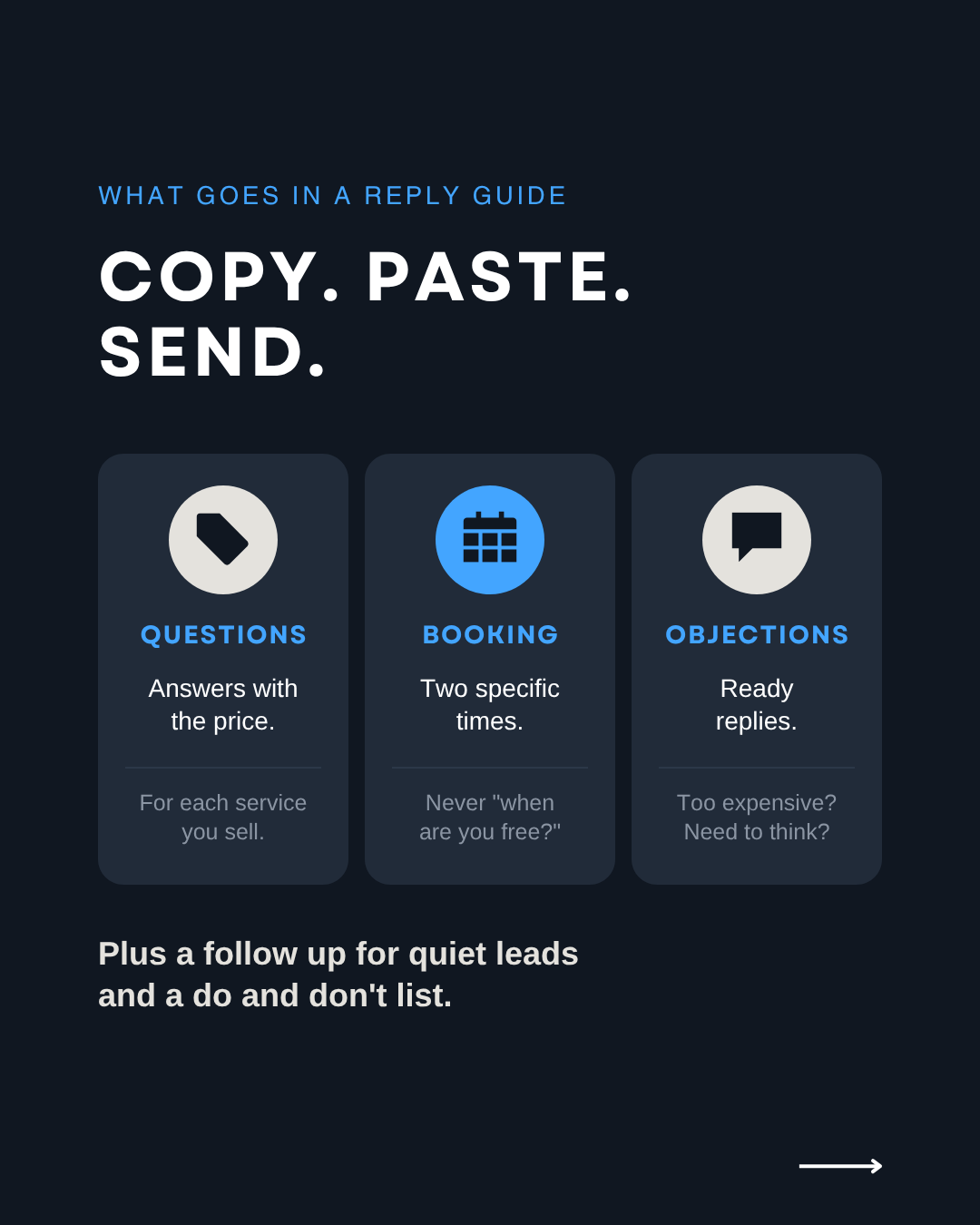
- Top questions per service, each with a copy and paste answer that already includes the price.
- Booking replies that offer at least two specific days and times. Never an open question.
- Objection replies for “it’s too expensive”, “I’ll think about it” and “I need to ask my partner”.
- A follow up message for leads who stop answering.
- A do and don’t list drawn from what the client actually did, such as “don’t send a price without a next step”.
Be honest in that last part. If a reply lost a lead, show the example and the better version.
Why offer two specific times instead of asking when they’re free?
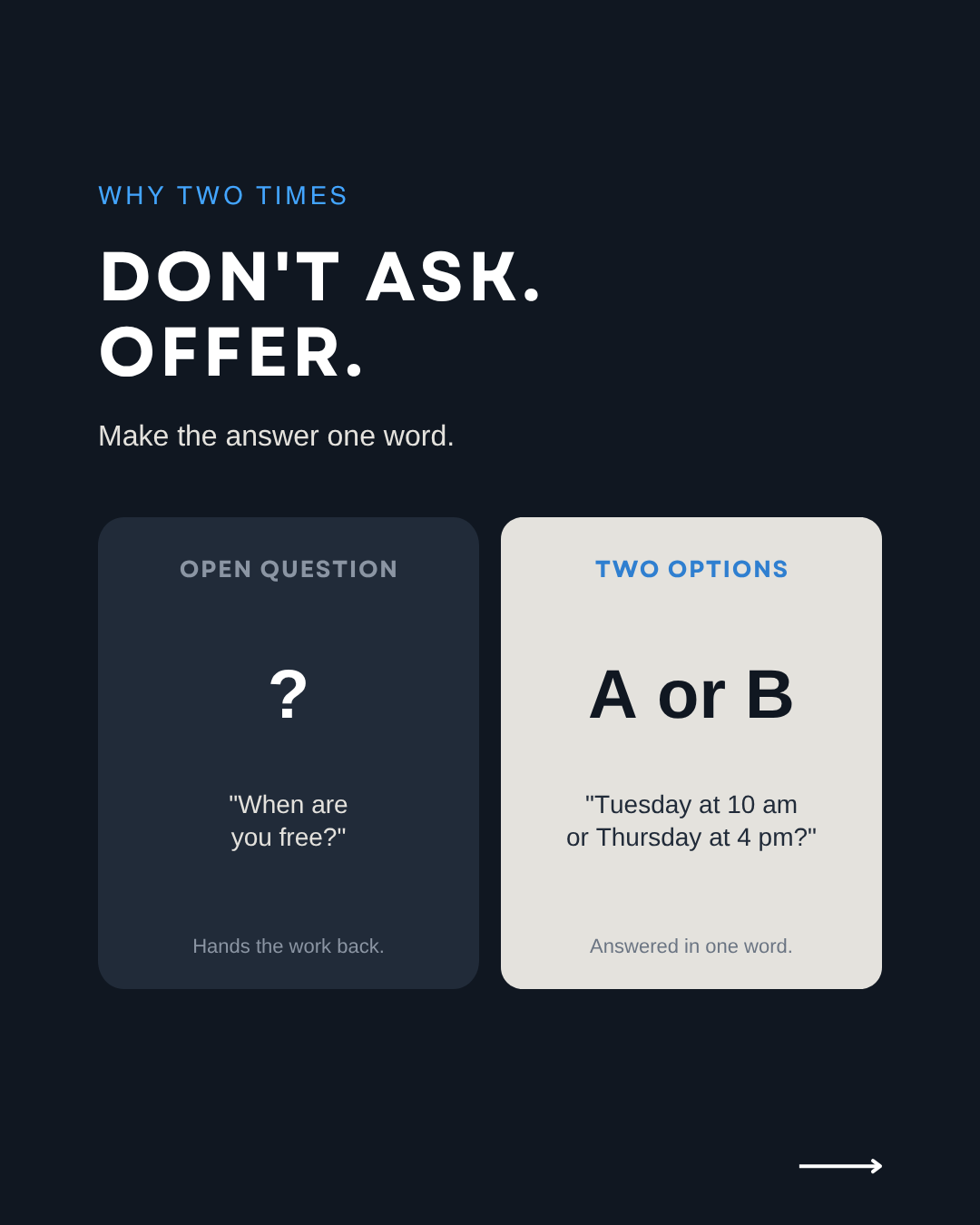
Because a specific choice is easier to act on. “When are you free?” hands the work back to the lead and adds a round of messages. “Tuesday at 10 am or Thursday at 4 pm?” can be answered in one word, and two options still let the lead choose.
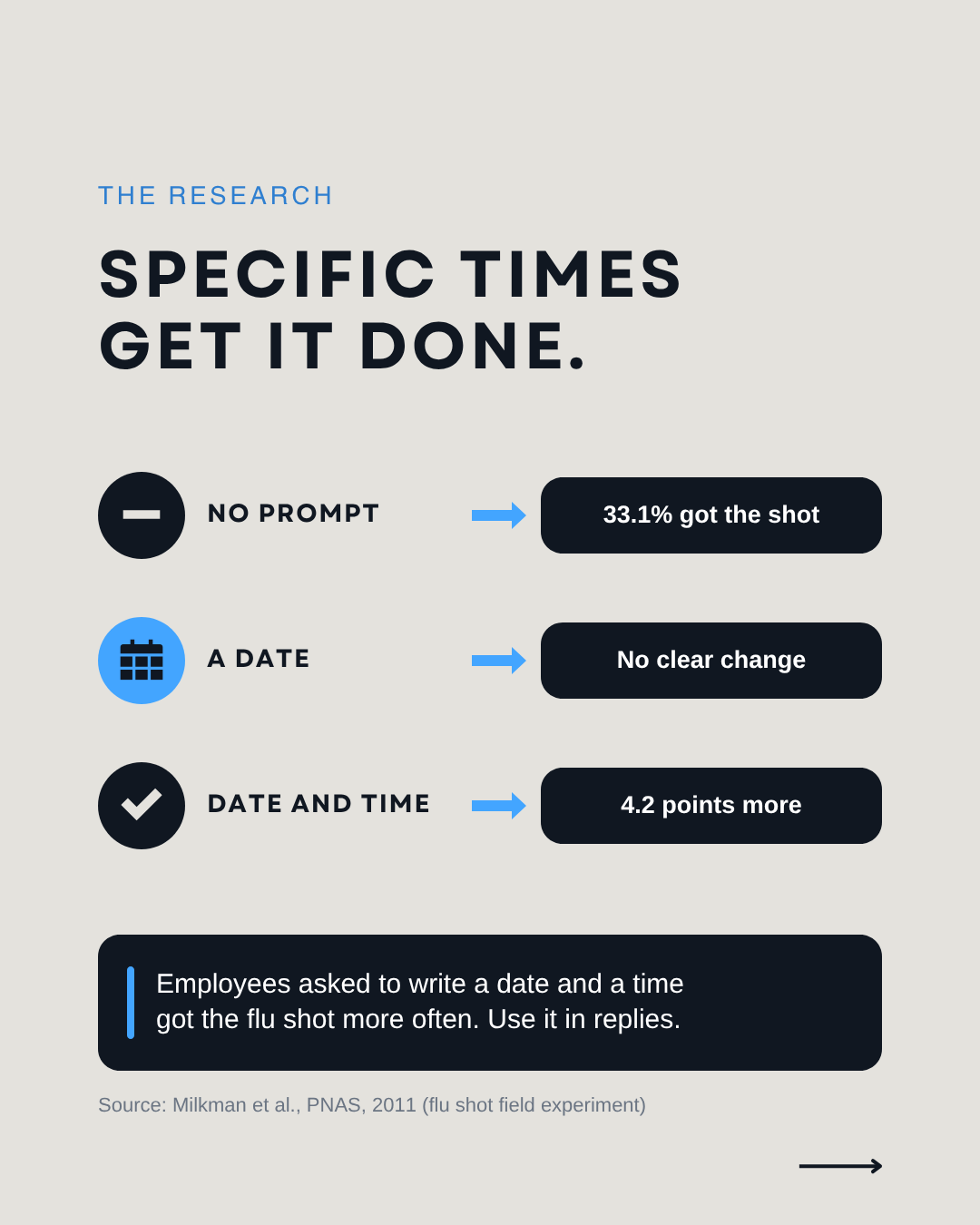
In a field experiment published in PNAS (2011), employees prompted to write down the date and time they planned to get a flu shot were 4.2 percentage points more likely to get one than a control group at 33.1%. A date alone made no significant difference.
When should you send the guide, and how do you keep it updated?
Send it two or three weeks after the ads start bringing leads, once you’ve seen how the client answers and which leads convert. A guide written earlier is guesswork. Then update it whenever a price, a service or a common question changes.
If the client wants to keep answering messages and calls, don’t force them to hand that over; give them the guide. Keep every price in one place so one change updates the whole file. In Google Docs, variable chips do this (Insert, Smart chips, Variables), but only on eligible work or school accounts. A spreadsheet where each reply pulls the price from one cell works on any account.
What do we do at 33 Genesis Road?
Here’s what we do: when a client answers their own leads, we read the first weeks of conversations, then send a reply guide per service with prices and booking times built in. We update it when prices change and point out, plainly, the replies that lost leads.
Want us to look at how your business answers leads from ads? Get a free audit, in less than 24 hours.
FAQ
How fast should I reply to a lead from a Facebook ad?
As fast as you can, ideally within the hour. Harvard Business Review found firms contacting leads within an hour were nearly seven times as likely to qualify them.
What if my client won’t let us answer their messages?
That’s fine. Send a reply guide so their answers match what the ads promise, and update it as you learn.
Should the price be in the first reply?
If the lead asked for it, yes. Give the price, then a next step, such as two times to choose from.
Sources: Harvard Business Review, Oldroyd, McElheran and Elkington, The Short Life of Online Sales Leads (March 2011); SmartCompany, Are you letting online leads go cold? (July 1, 2011); InsideSales.com and James Oldroyd, Lead Response Management Study (October 16, 2007); Google, Local Services Ads Help: About ad rankings (checked October 14, 2026); Milkman, Beshears, Choi, Laibson and Madrian, Using Implementation Intentions Prompts to Enhance Influenza Vaccination Rates, PNAS (June 2011); Google, Docs Editors Help: Insert and use variable chips (checked October 14, 2026)