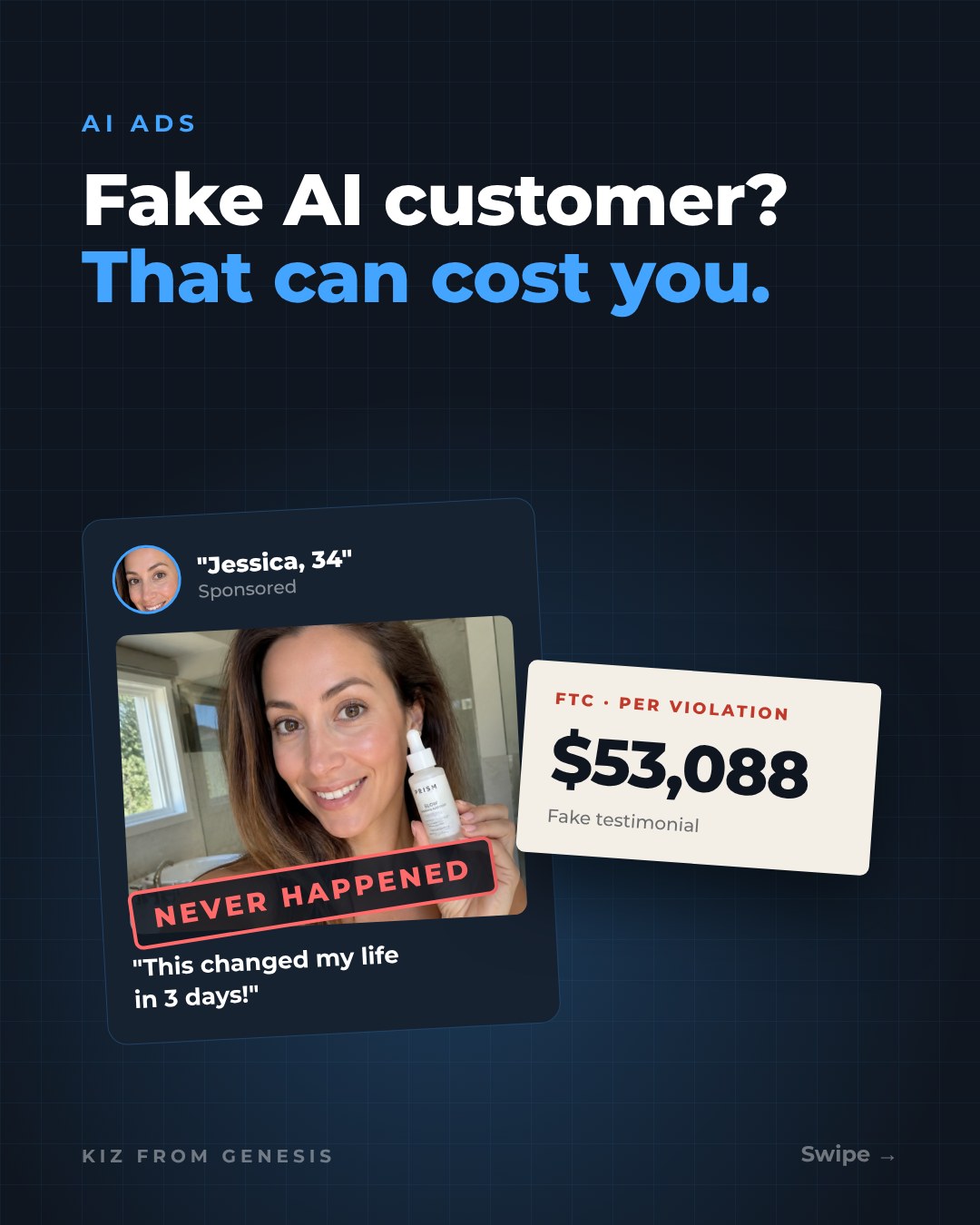
Are AI testimonials legal? Only when they’re true. In the US, an AI avatar that poses as a real customer and tells a story that never happened counts as a fake testimonial under the FTC’s Consumer Reviews and Testimonials Rule, in force since October 21, 2024. Knowing violations can cost up to $53,088 each.
AI can make you a hundred ads a month. The trend right now: AI avatars that look like real customers, holding your product, telling a story that never happened. Some of those ads can get you fined.
What does the FTC rule say about AI generated testimonials?
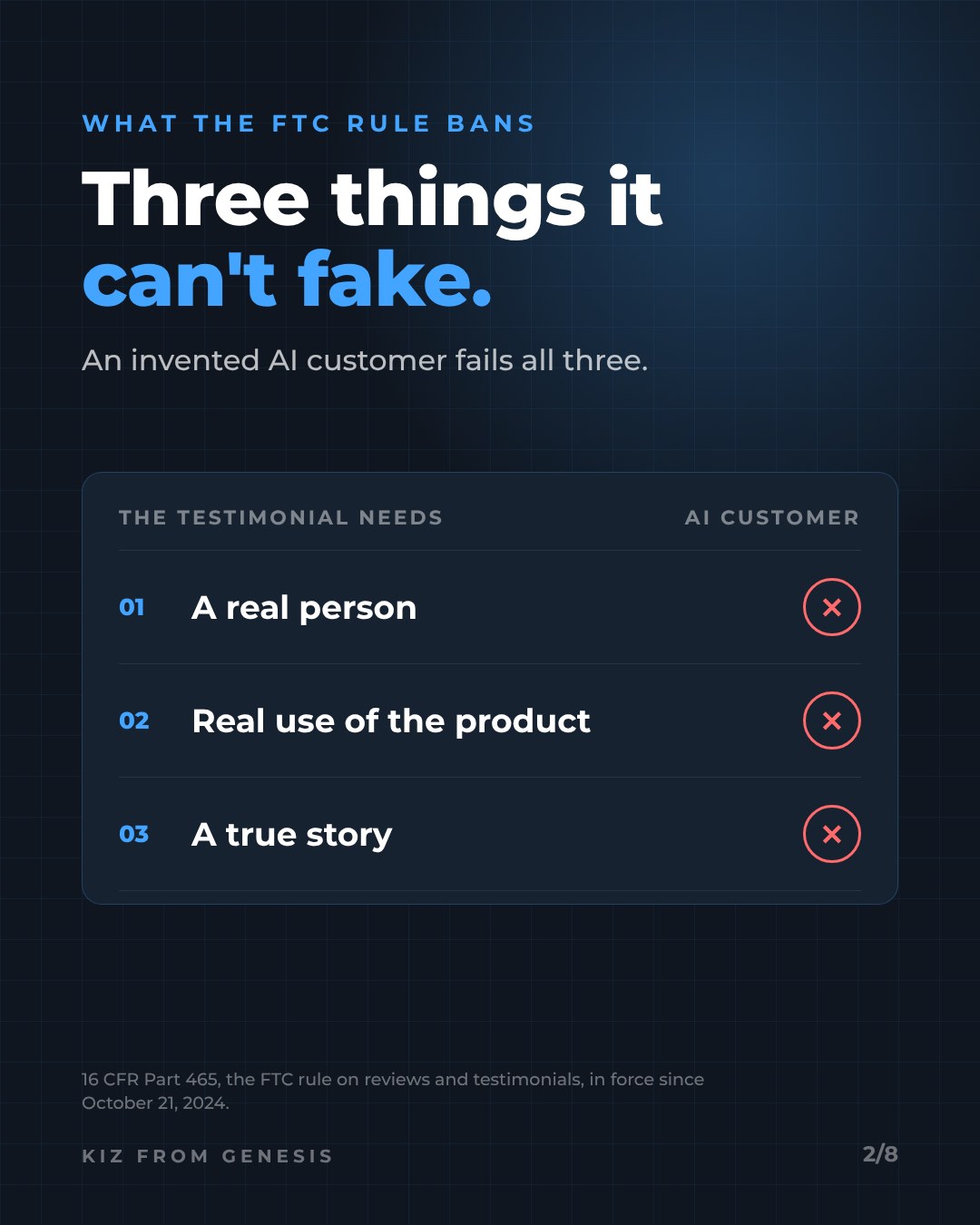
It bans testimonials that lie about who is speaking or what happened. Under 16 CFR Part 465, a business can’t create or share a testimonial that misrepresents that the person exists, that they used the product, or what their experience was. An invented AI customer fails all three tests.
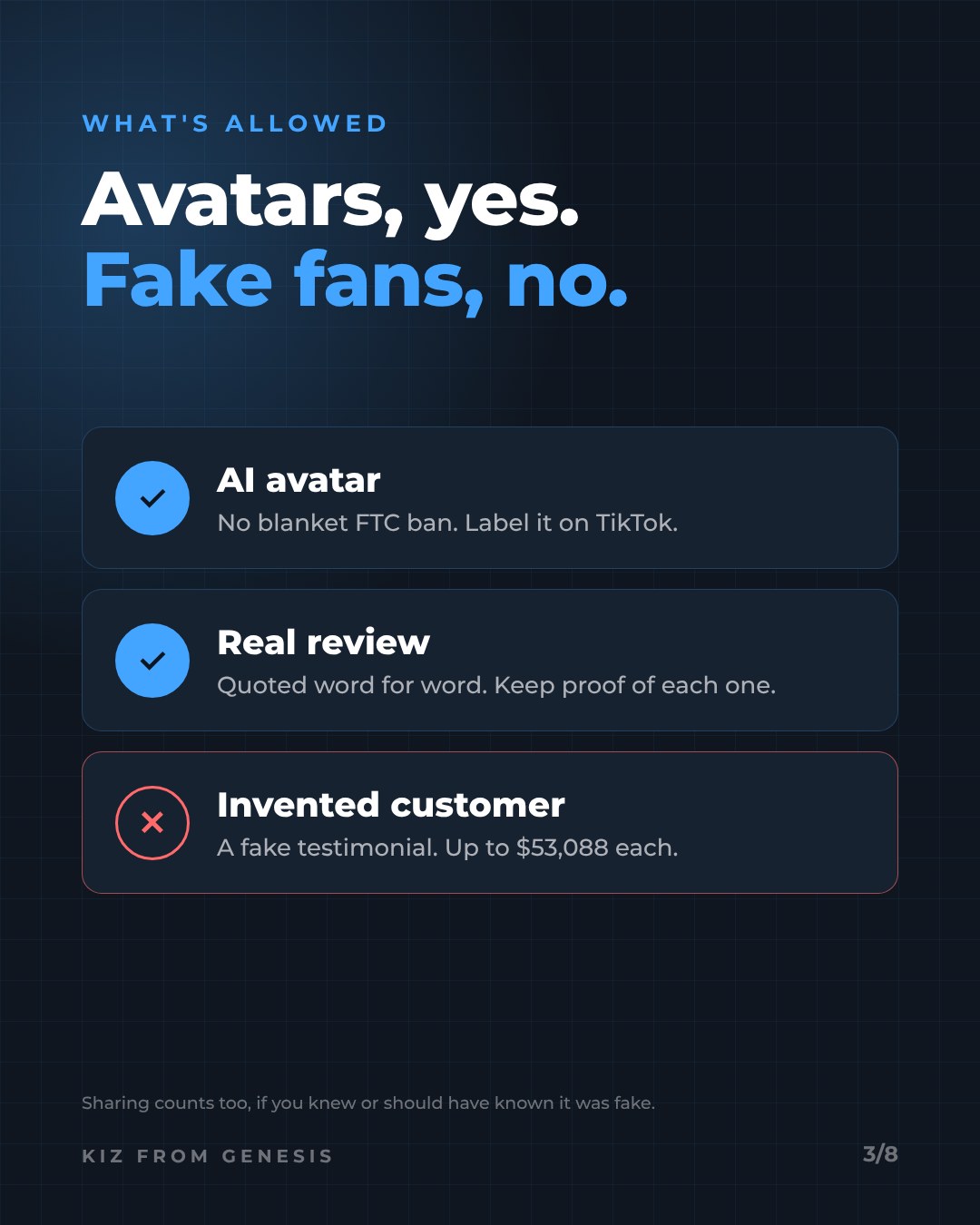
Sharing counts too, when you “knew or should have known” a testimonial was false. AI avatars as such are allowed: the FTC’s questions and answers page, which names TikTok’s Symphony Avatars, says the rule has no blanket ban on them. An avatar crosses the line when the testimonial behind it is fake or false, and it can still deceive under the FTC Act.
How much can a fake AI testimonial cost?
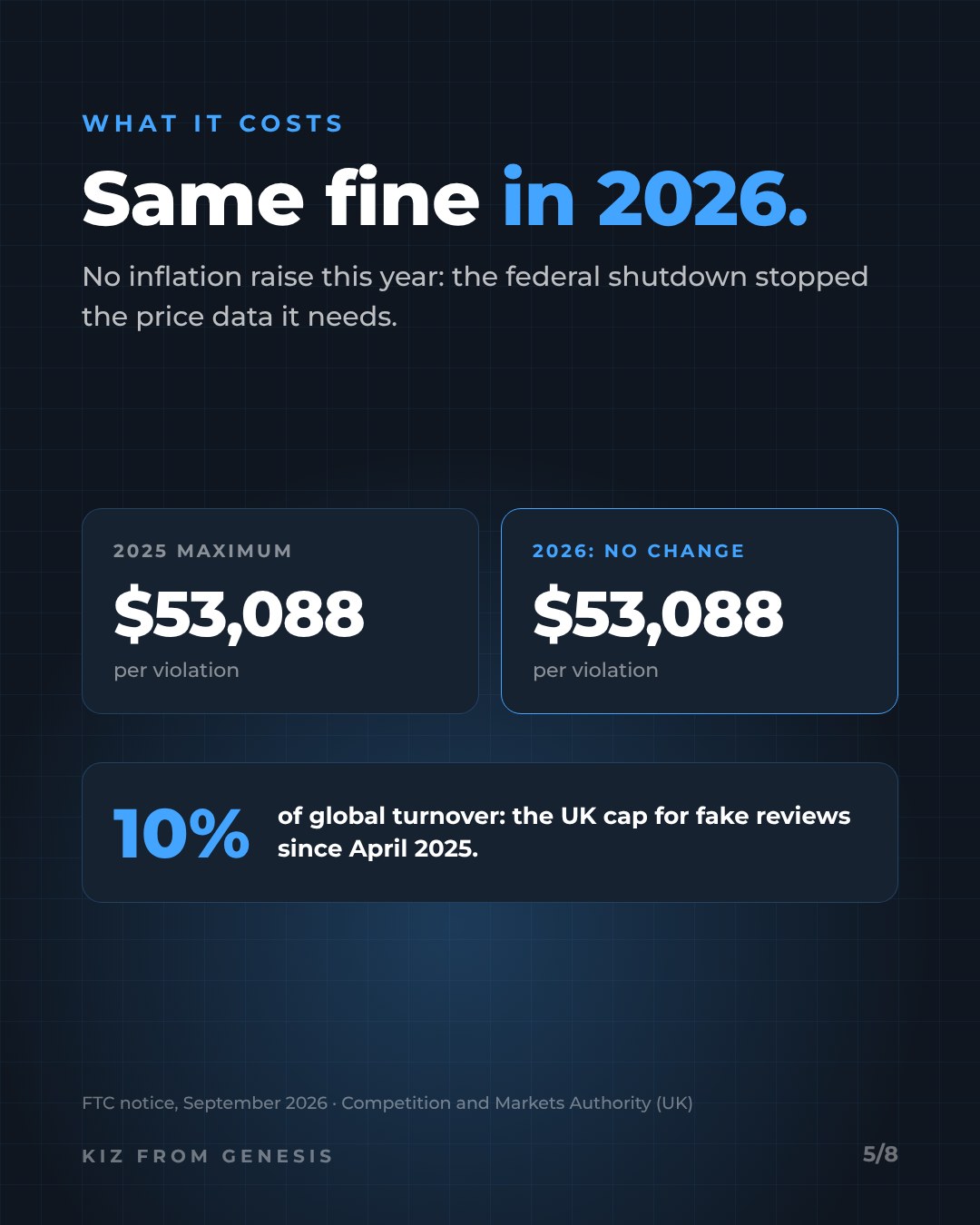
Up to $53,088 per violation. The FTC cited that figure in warning letters to 10 companies on December 22, 2025. The agency usually raises it for inflation each January, but this time the amount stays the same for all of 2026.
The reason: a September 2026 FTC notice explains that the government shutdown stopped the Bureau of Labor Statistics from producing October 2025 inflation data, so the Office of Management and Budget canceled the 2026 adjustment.
Selling in the UK? Since April 2025, UK law explicitly bans fake reviews, and the Competition and Markets Authority can fine a business up to 10% of its global turnover.
Do TikTok and Meta make you label AI ads?
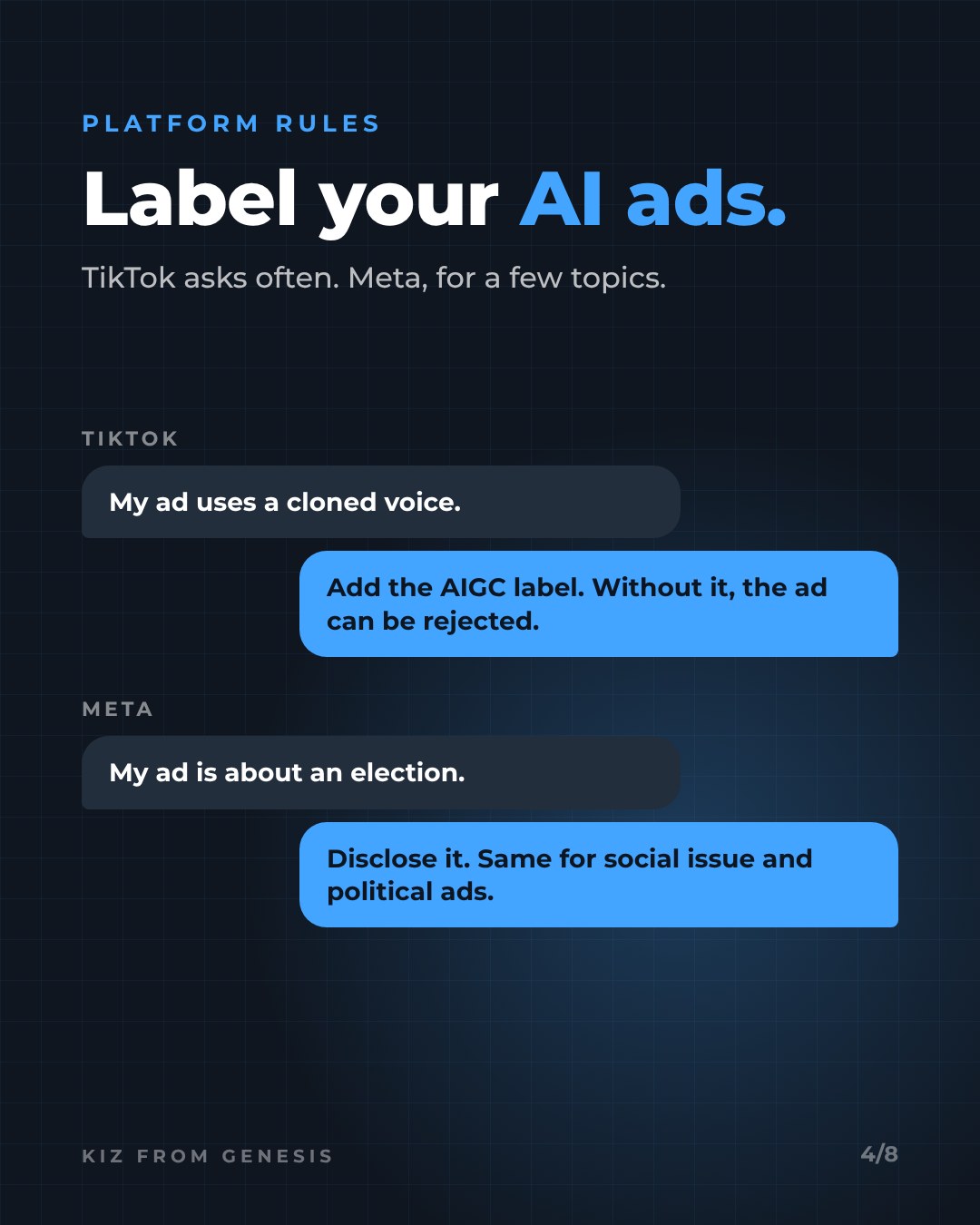
TikTok does, and Meta does for some ads. TikTok’s ad policy, updated April 2026, requires its AIGC label or your own clear disclaimer when an ad uses fully AI generated images, video or audio, shows someone doing something they didn’t do, or clones a voice. Undisclosed AI ads get rejected or restricted.
Meta requires advertisers to disclose AI use in ads about social issues, elections or politics, and since June 1, 2026 it adds more information to ads it detects were made with third party AI tools.
How many AI ads should you test at once?
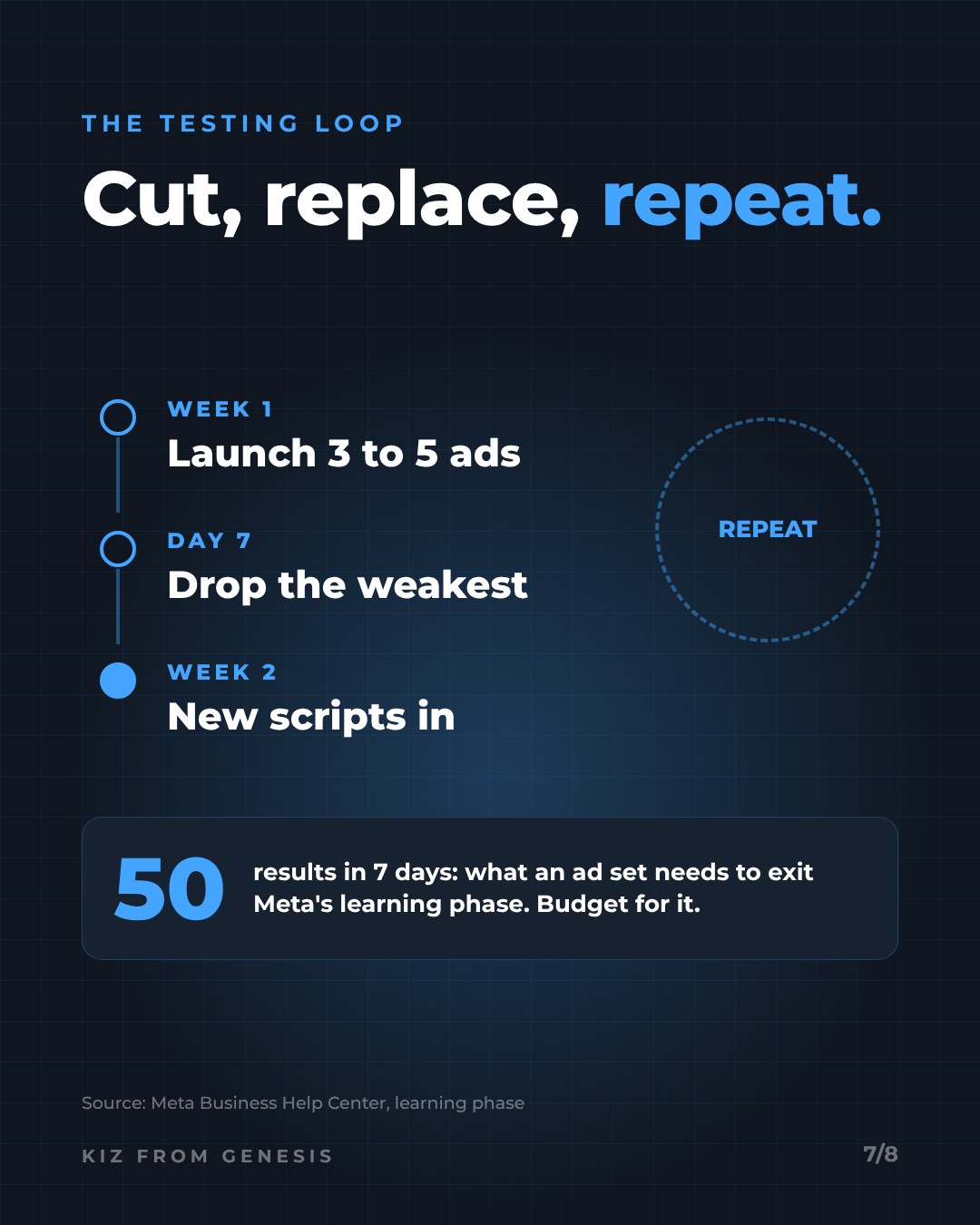
A few strong ones, not two hundred. Meta says an ad set’s learning stabilizes with a minimum of 50 events over 7 days, an event being the result you optimize for, like a purchase or a lead. Spread a small budget across dozens of ad sets and few will ever get there.
Here’s what you can do:
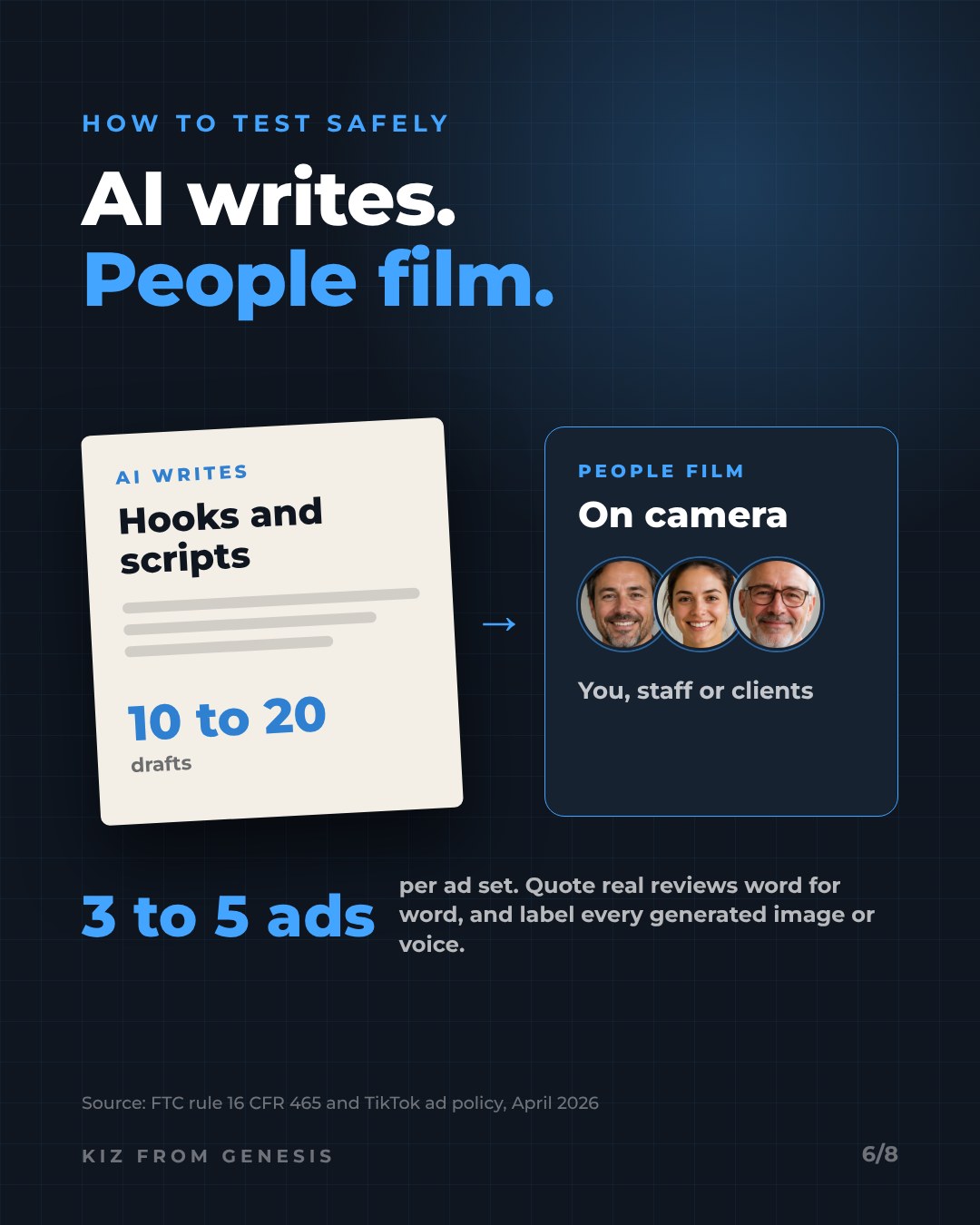
- Let AI write 10 to 20 hooks and scripts.
- Film real people: you, your team, or customers who agreed in writing.
- Quote only real reviews, word for word, and keep proof of each one.
- Label every AI generated visual and voice.
- Launch three to five ads per ad set, with enough budget to reach about 50 results a week.
- After a week, cut the weakest ads and replace them with your next scripts.
What do we do at 33 Genesis Road?
Here’s what we do: AI writes the hooks and the scripts, and real people show up on camera. We test a few strong ads at a time and let each ad set exit the learning phase before we judge it. Anything AI generated gets a label.
Want us to look at the ads in your business? Get a free audit, in less than 24 hours.
FAQ
Can I use AI avatars in my ads?
Yes. The FTC rule doesn’t ban AI avatars, but an avatar can’t pose as a customer who doesn’t exist or describe an experience that never happened. On TikTok, label it.
Can an AI avatar read a real customer review?
The rule only prohibits it when the testimonial is fake or false. Avatars can still mislead viewers under the FTC Act, so keep the customer’s exact words and say the face or voice is AI.
What is the FTC fine for fake reviews in 2026?
Up to $53,088 per violation. The FTC kept its 2025 penalty amounts for all of 2026.
Does the FTC rule apply to small businesses?
Yes. The rule defines a business as any individual or company that sells products or services, with no size exemption.
Sources: eCFR, 16 CFR Part 465: Use of Consumer Reviews and Testimonials (October 9, 2026); Federal Trade Commission, The Consumer Reviews and Testimonials Rule: Questions and Answers (November 2024); Federal Trade Commission, FTC Warns 10 Companies About Possible Violations of the Agency’s New Consumer Review Rule (December 22, 2025); Federal Trade Commission, Civil Penalty Inflation Adjustments, Federal Register notice (September 15, 2026); GOV.UK, Competition and Markets Authority, CMA to boost consumer and business confidence as new consumer protection regime comes into force (April 7, 2025); TikTok, TikTok Ads Policy: Misleading and false content (April 2026); Meta, Ads about Social Issues, Elections or Politics (accessed October 14, 2026); Meta, How Meta Is Preparing for the 2026 US Midterm Elections (February 19, 2026, updated June 1, 2026); Meta Horizon Developers, Understanding and optimizing your ad campaign (April 8, 2026)