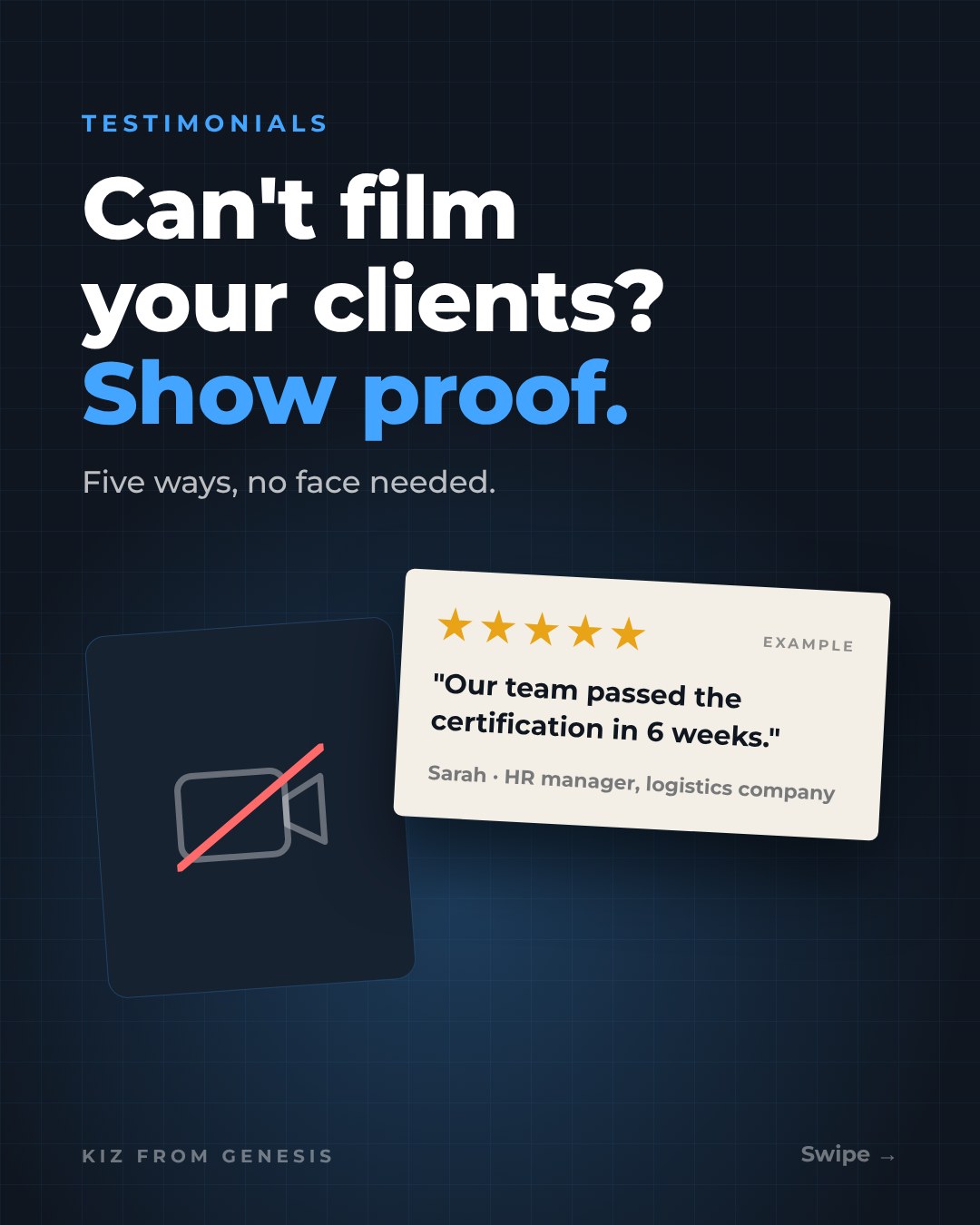
Here is how to get testimonials when clients don’t want to be filmed: collect proof that doesn’t need a face. Anonymized case studies, written reviews with a first name and role, faceless photos, voice only clips and a discount for filming permission all work, with written consent and any incentive disclosed.
Why do some clients refuse photos and video?
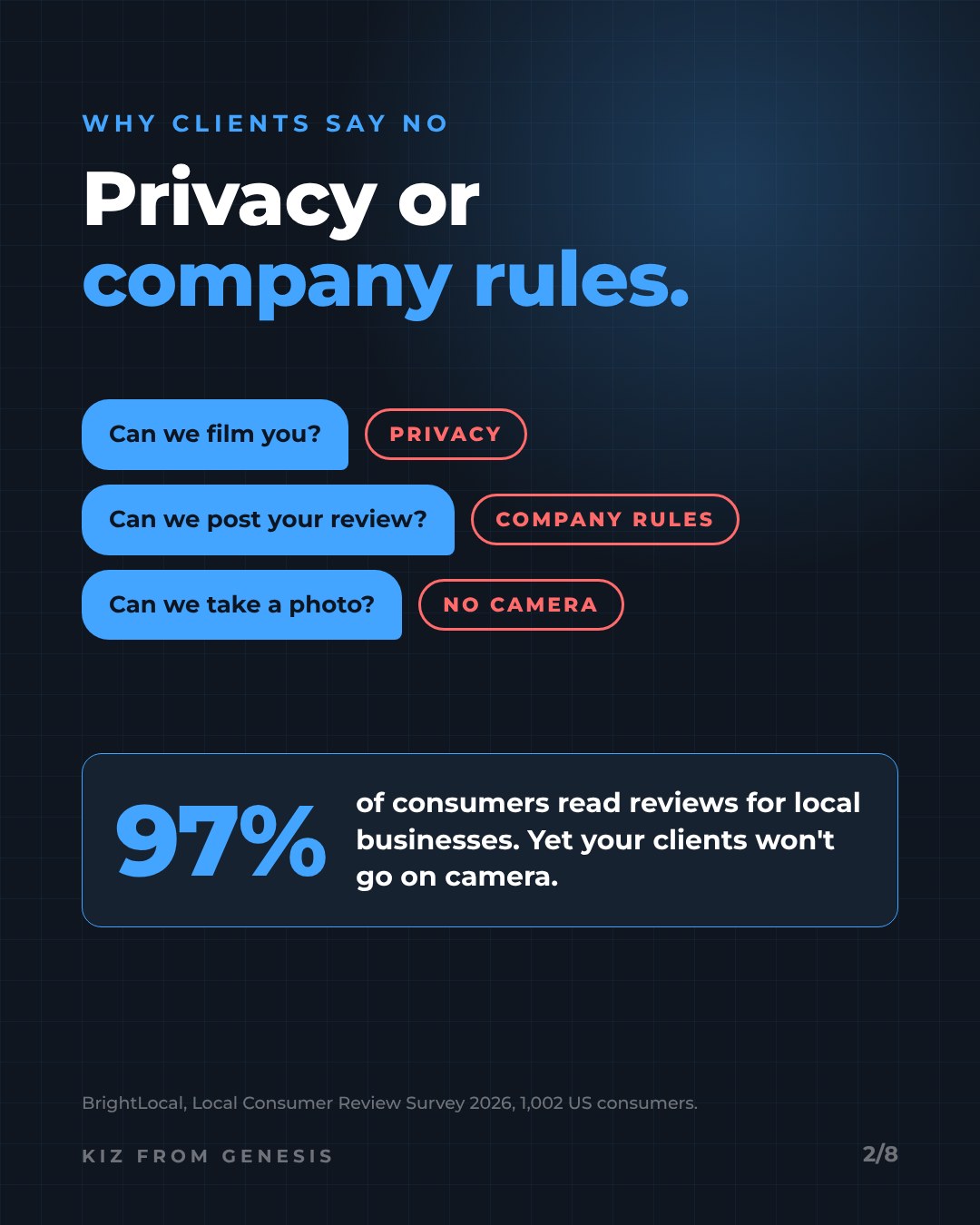
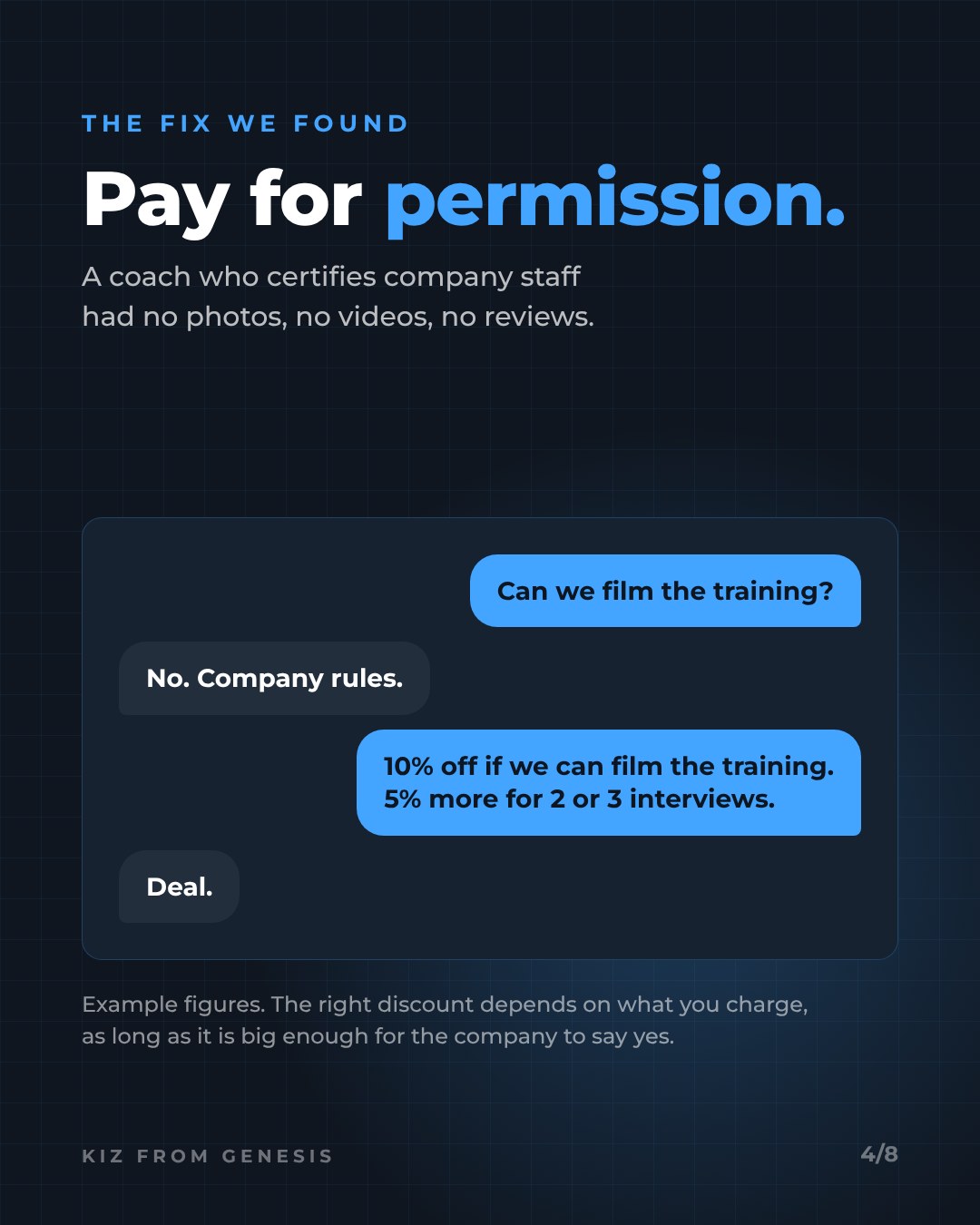
Privacy, company policy, or both. Some people don’t want to be seen using a service, and some large companies won’t let employees appear in another business’s marketing. A coaching business owner we met trains and certifies employees of large companies. For that reason he had no photos, no videos and no testimonials.
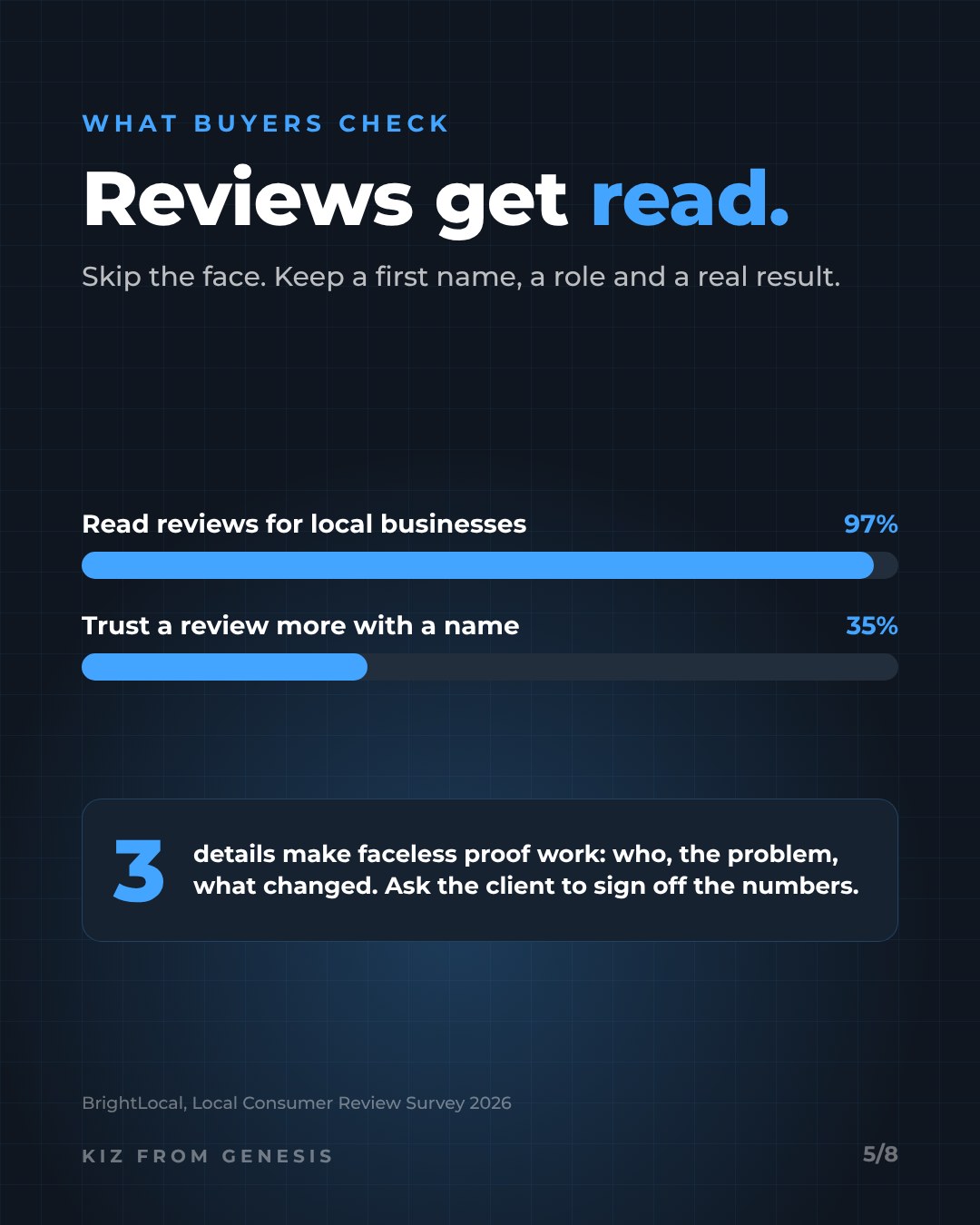
That gap matters, because buyers look for proof. In BrightLocal’s 2026 survey of 1,002 US consumers, 97% said they read reviews for local businesses.
What can you use instead of video testimonials?
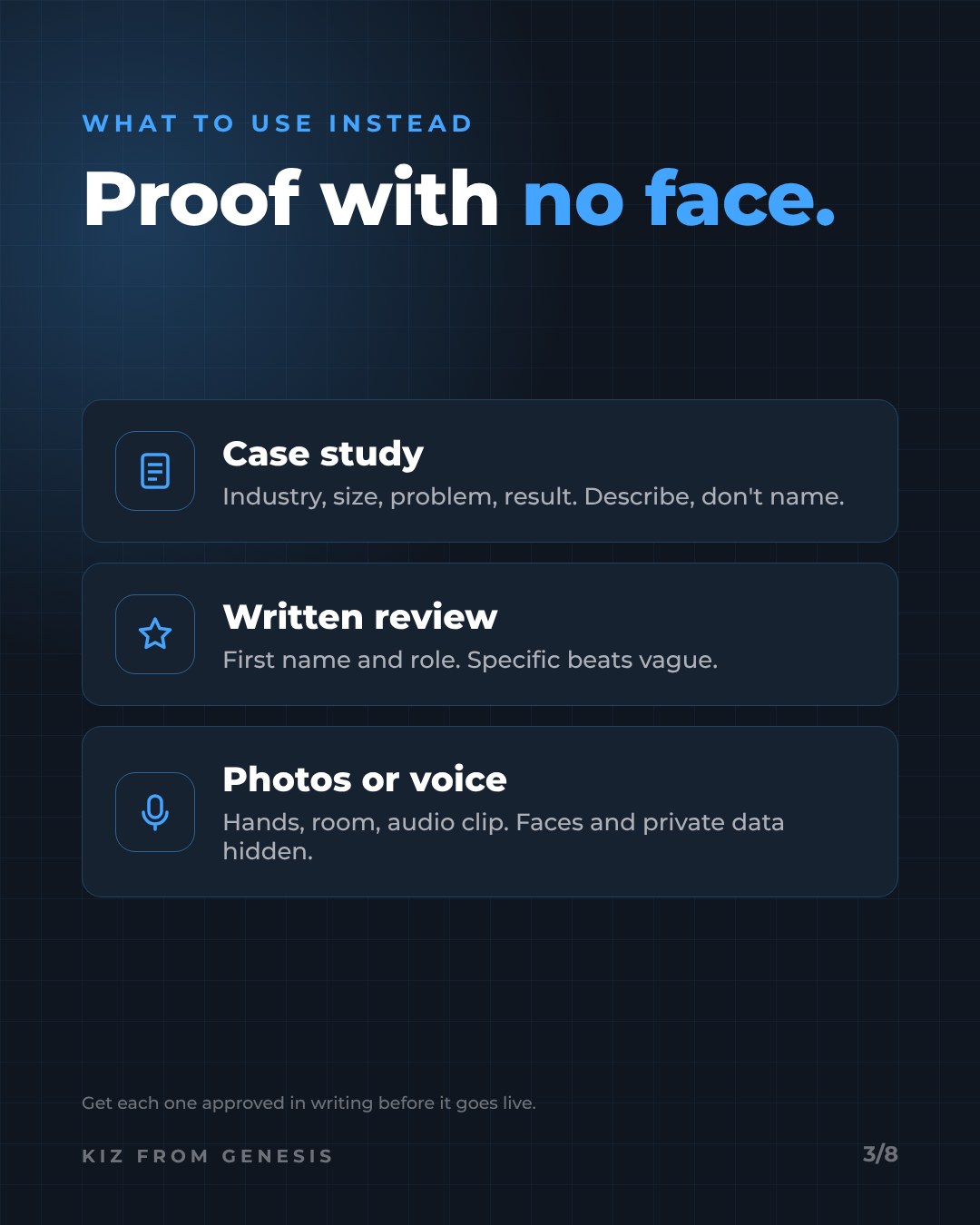
Five options cover most cases. Pick the ones your clients accept and get each one approved in writing before it goes live. Proof without a face still works when it is specific: who the client is, what the problem was, and what changed.
- A discount for filming permission. The fix we found with the coach: a real discount for companies that allow photos and video of the event and certification, plus a second one, about half the first, if two or three employees give an interview. He sets the numbers; they must be significant.
- An anonymized case study. Describe the client by industry and size, then the problem, what you did and the result, with numbers the client signs off on.
- Written reviews with a first name and role. In the same BrightLocal survey, 35% of consumers said a named reviewer makes a review more trustworthy.
- Photos and video without faces. Hands taking notes, the back of the room, certificates on a table, a screen showing results with private data hidden.
- Voice only testimonials. A short audio clip over a photo of the venue or a slide.
What permissions do you need before you post?
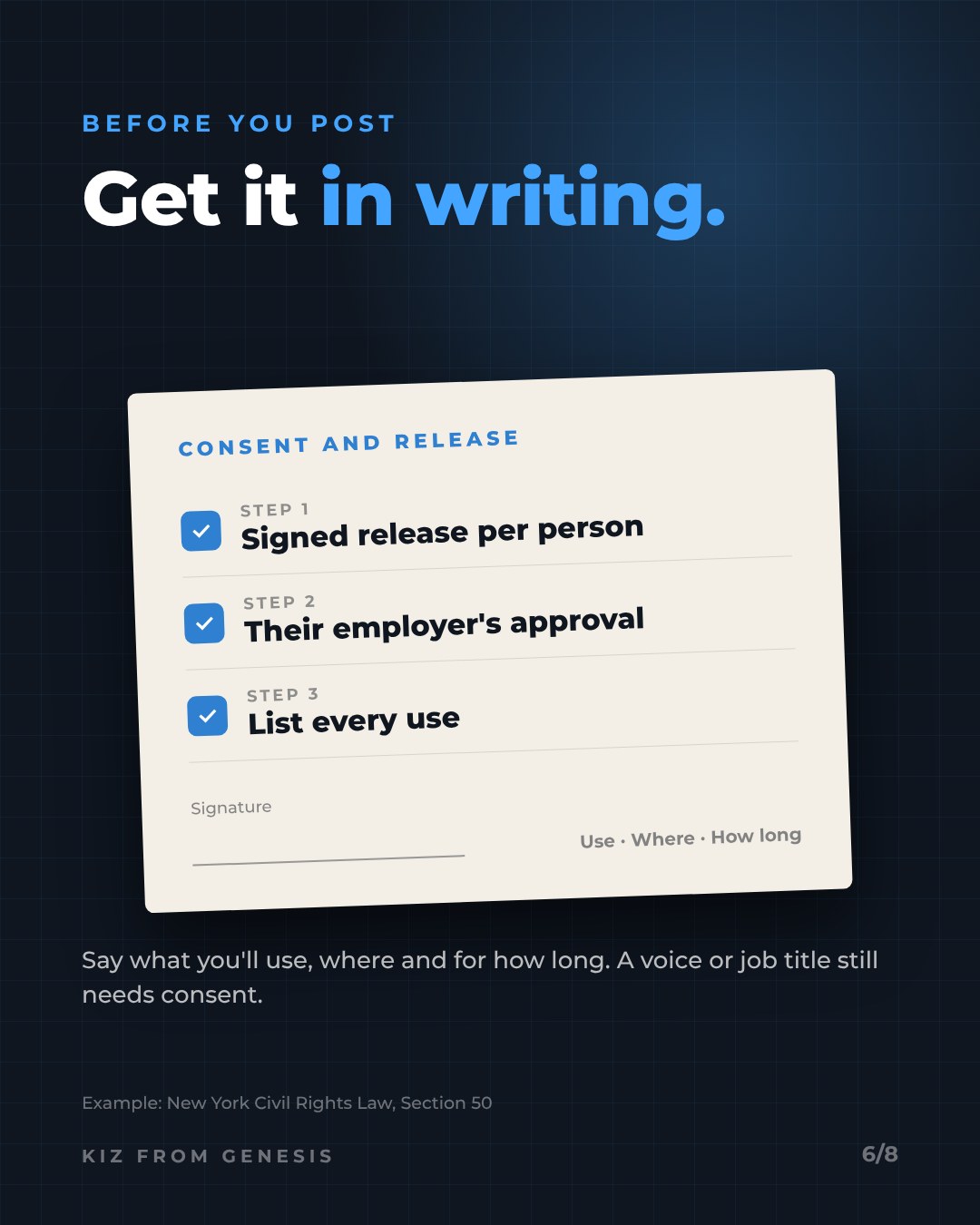
A signed release from every person who can be identified, and written approval from the company when they are its employees. A voice, a first name or a job title can identify someone as surely as a face, so faceless content still needs consent.
New York law, for example, makes it a misdemeanor to use the name, portrait, picture, likeness or voice of a living person for advertising without their written consent. The release should list what you will use (photo, video, voice, name, role, logo), where, and for how long.
Do you have to disclose a discount given for a testimonial?
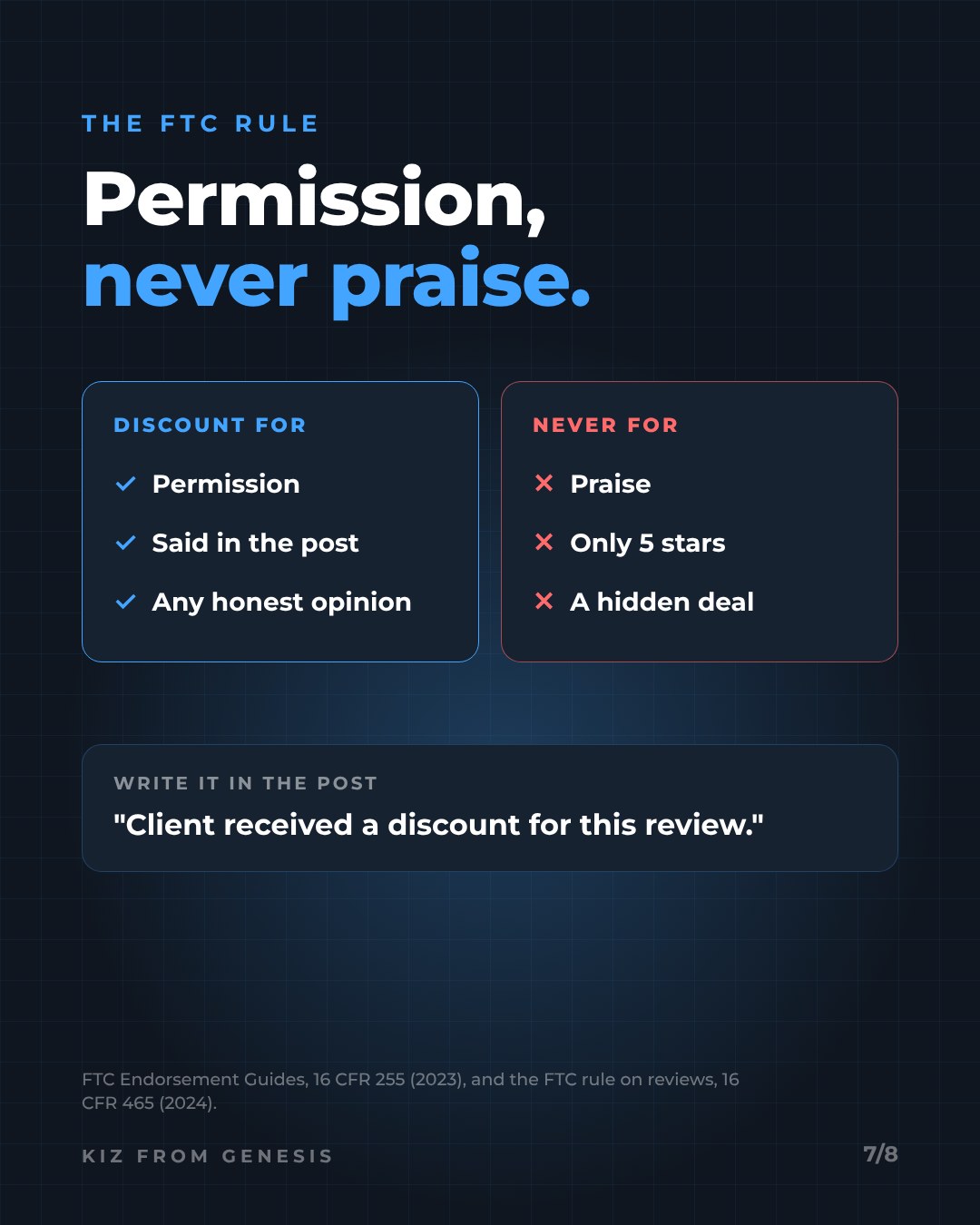
Yes. Under the FTC Endorsement Guides (16 CFR Part 255, updated July 26, 2023), a connection the audience wouldn’t expect, such as a discount, free service, gift, money or a business, family or personal tie, must be disclosed clearly and conspicuously. A paying client who appears for nothing in return needs no disclosure.
Put the disclosure in the post itself, for example “Client received a discount for this review.” The FTC’s guidance adds that you can’t condition a discount on a review being positive. Its rule on consumer reviews and testimonials (16 CFR Part 465, effective October 21, 2024) bans fake testimonials and incentives tied to a particular sentiment. Pay for permission, never for praise.
Rules differ outside the US: the UK’s CAP Code bans testimonials used without permission and requires proof they are genuine, and EU law bans commissioning false reviews or endorsements.
What do we do at 33 Genesis Road?
Here’s what we do: when a client can’t show faces, we plan proof that doesn’t need them, based on what their clients accept. We prepare the release and disclosure line with the client before anything is filmed, so nothing has to come down later.
Want us to look at the proof on your website and social pages? Get a free audit, in less than 24 hours.
FAQ
Can I post a testimonial without the client’s name?
Yes, if it is real and the client approved it in writing. Describe them by role, industry or size, and keep the approval.
Do I need to disclose a discount if the client only allowed photos?
Disclosing it is the safe choice. It is required once the client or its employees say anything about your service, because the discount is a material connection.
Can a testimonial mention results?
Yes, if true. If most clients don’t get that result, the FTC Endorsement Guides say the ad should clearly show what people can generally expect.
Is this legal advice?
No. It is general information. Have a lawyer check your release form, especially when employees are involved.
Sources: BrightLocal, Local Consumer Review Survey 2026 (February 11, 2026); New York State Senate, Civil Rights Law Section 50 (revised May 3, 2024); Federal Trade Commission, Guides Concerning the Use of Endorsements and Testimonials in Advertising, 16 CFR Part 255 (July 26, 2023); Federal Trade Commission, FTC’s Endorsement Guides: What People Are Asking (updated July 15, 2025); Federal Trade Commission, Trade Regulation Rule on the Use of Consumer Reviews and Testimonials (August 22, 2024); Federal Trade Commission, Federal Trade Commission Announces Final Rule Banning Fake Reviews and Testimonials (August 14, 2024); Advertising Standards Authority, Testimonials and endorsements (September 21, 2026); European Union, Directive (EU) 2019/2161 (November 27, 2019)