Meta’s Muse for Small Business is a good fit for owners who run most of their marketing inside Instagram, Facebook and Meta ads and want next week’s drafts without opening five apps. It is a weaker fit for larger companies with many sales channels, teams and data rules. For them, the better setup today is a general AI model connected to all their tools through automation, with approval steps they control.
What is Muse for Small Business?
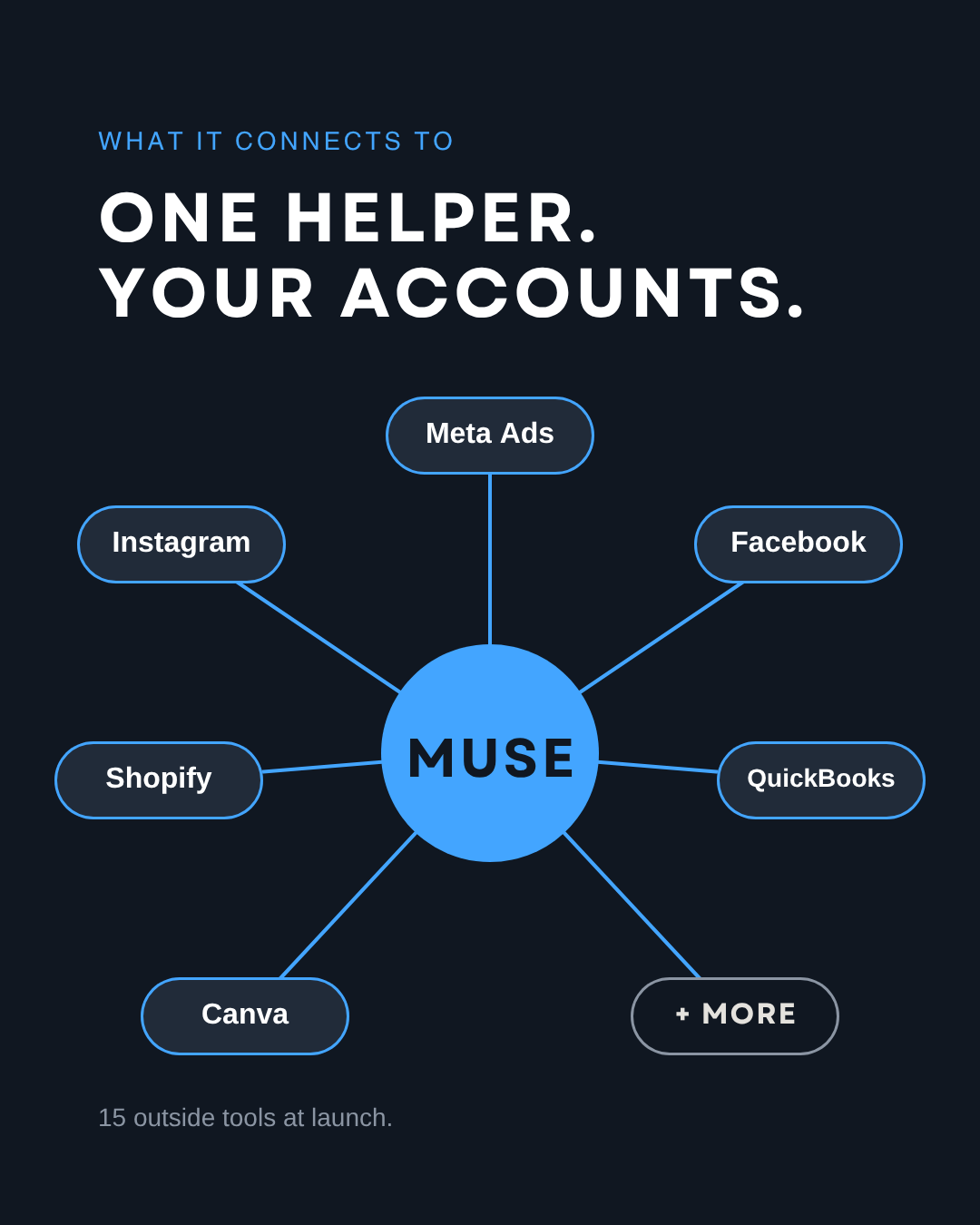
Muse is Meta’s AI agent. It launched on September 8 as a personal assistant app in the US and Canada, and on September 29 Meta released a version for small businesses. It connects to Instagram professional account analytics, Facebook Pages and Meta ad accounts, plus outside tools such as Shopify, QuickBooks, Canva, Slack, Stripe and Notion.
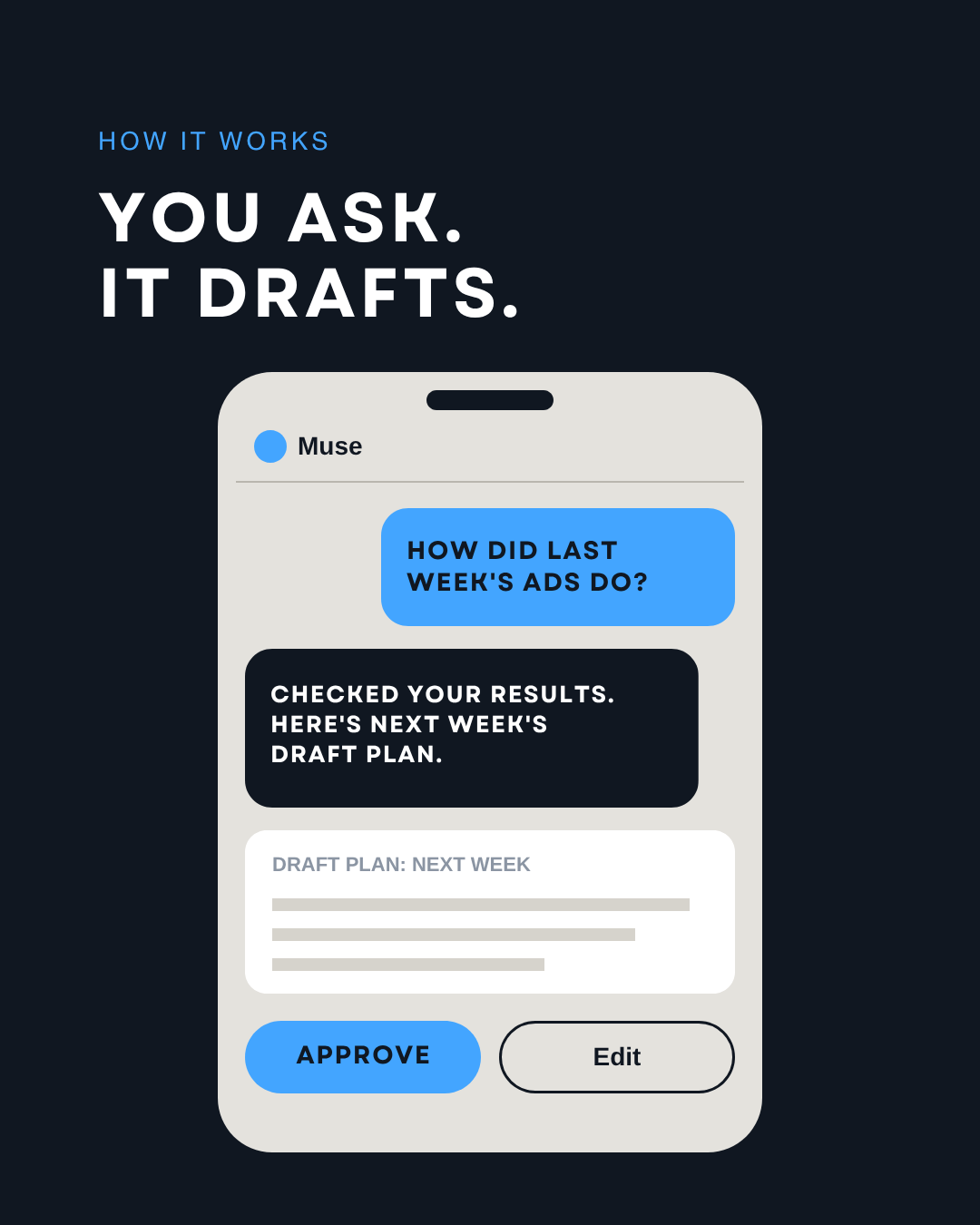
Owners give it a goal, such as finding new customers. Muse then analyzes campaign results, checks trending topics and drafts the next week’s campaigns. Meta’s rule is clear: “Nothing publishes, sends, or spends without your approval.”
Who is Muse a good fit for?
A small business where one person handles marketing and most customers find it through Meta’s apps. Think of a bakery owner who posts on Instagram, boosts a post on Friday and sells through Shopify. Muse sees all of that in one place, so the Monday report becomes one question instead of an hour of exports.
Meta’s own reasoning matches this: small businesses told it they are “short on hours, not ideas.” It is also cheap to try. Muse is free up to a usage limit, and paid plans for more usage cost $20 to $100 a month, according to Retail Dive.
Why is Muse a weaker fit for larger companies today?
Three reasons:
- Its view starts from Meta. A company that also sells through Google ads, email, a sales team and a CRM needs an assistant that reads all of those, not mainly one platform.
- Teams need roles, permissions and a record of who approved what. Muse for Small Business is built for one owner approving their own drafts.
- The enterprise version is not on sale yet. Meta announced an Enterprise Platform on September 28, led by former MongoDB CEO CJ Desai, but gave no pricing and no launch date.
What should larger companies use instead?
For now, a general AI model, such as Claude, ChatGPT or Gemini, connected to the company’s own tools through automation platforms like Make or n8n, or through an API. Set up this way, the AI reads the CRM, the ad accounts, email and accounting together, follows the company’s permission rules and logs every action before anything goes out.
It takes more work to build. In MIT’s 2025 study of company AI projects, tools built in house succeeded about half as often as tools bought from specialized vendors: about 33% against 67%. That is why most companies bring in a partner for the setup instead of starting from zero.
How should a small business start with Muse?
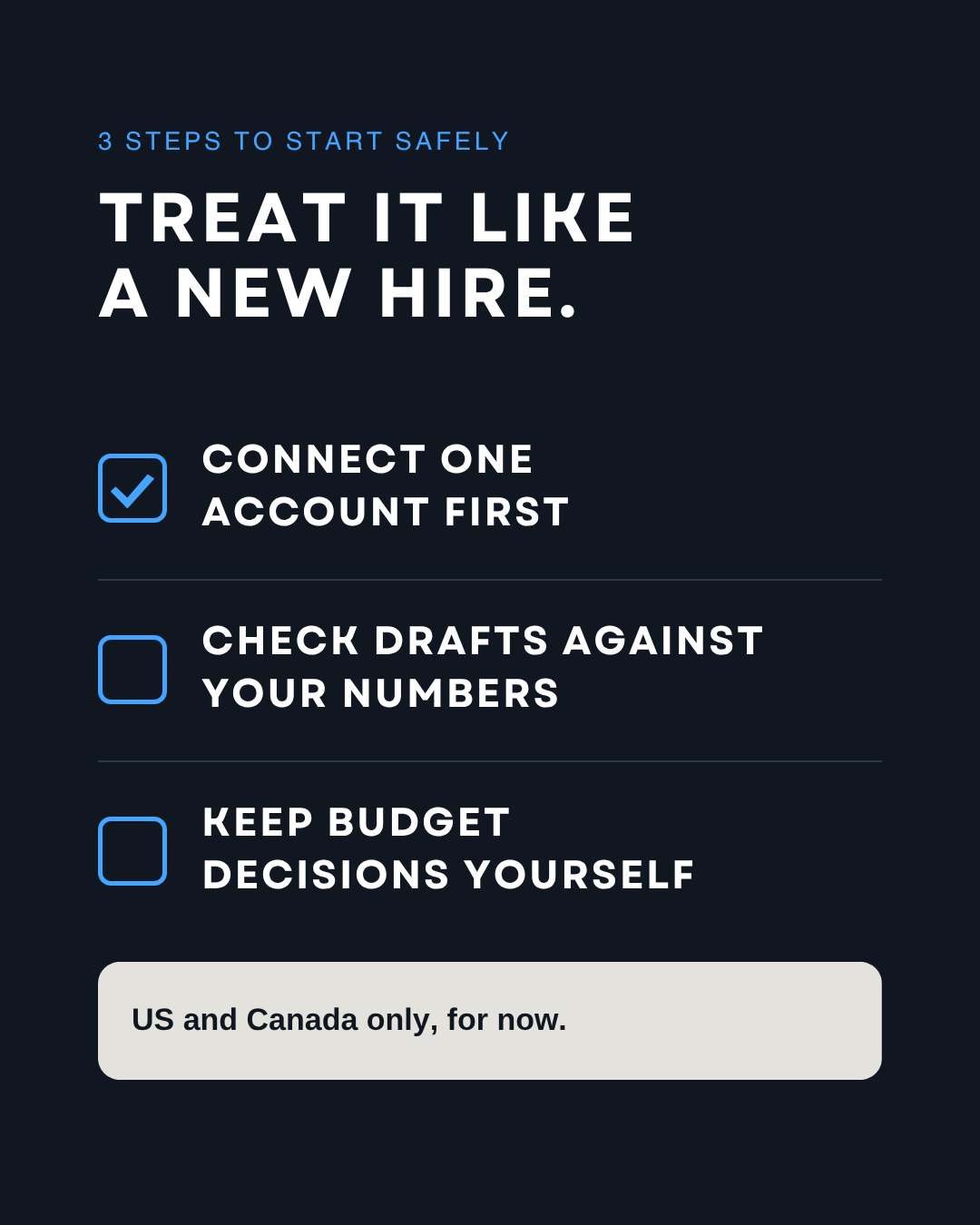
Treat Muse like a new junior hire:
- Connect one account first, for example your Instagram professional account. Add the ad account or Shopify once the drafts make sense.
- Check every draft against your own numbers before you approve it.
- Keep budget decisions yourself. Meta has not said whether Muse can change bids, budgets or targeting.
- Decide what you share. Muse works best with access to your finances and customer records, and MediaPost points out that its success depends on owners being comfortable giving Meta that access.
What do we do at 33 Genesis Road?
For small clients who run on Instagram and Facebook, we set Muse up one account at a time and review its first drafts with them. For larger clients, we connect a general AI model to their tools through automation, with approval steps and a log of every action, so the AI works across everything they use.
FAQ
Is Meta’s Muse free?
Yes, up to a usage limit. Paid plans for more usage cost $20 to $100 a month.
Where is Muse available?
In the US and Canada for now.
Can Muse spend my ad budget on its own?
No. Meta says nothing publishes, sends or spends without your approval.
Is Muse a good choice for agencies or large companies?
Not yet. Meta has announced an enterprise platform, but without pricing or a launch date. Until then, larger teams get more from a general AI model connected to their own tools.
Want a second pair of eyes on where AI fits in your business? At 33 Genesis Road, we offer a free audit of your business, delivered in less than 24 hours. Request it on our free audit page, or message us on LinkedIn or Instagram. For more lessons like this one, join our free weekly newsletter. You can also see how we work on our services page.
Sources: The Next Web, “Meta launches Muse for small businesses, linking its AI agent to Shopify” (September 29, 2026); TechCrunch, “Meta is expanding its AI agent Muse to small businesses” (September 29, 2026); MediaPost, “Meta Launches More Business-Facing Muse AI Offerings” (September 30, 2026); Retail Dive, “Meta debuts AI agent for small businesses” (October 1, 2026); Runtime Wire, “Meta puts Muse models, agents and coding tools under a new enterprise platform” (September 2026); Fortune, “MIT report: 95% of generative AI pilots at companies are failing” (August 18, 2025).