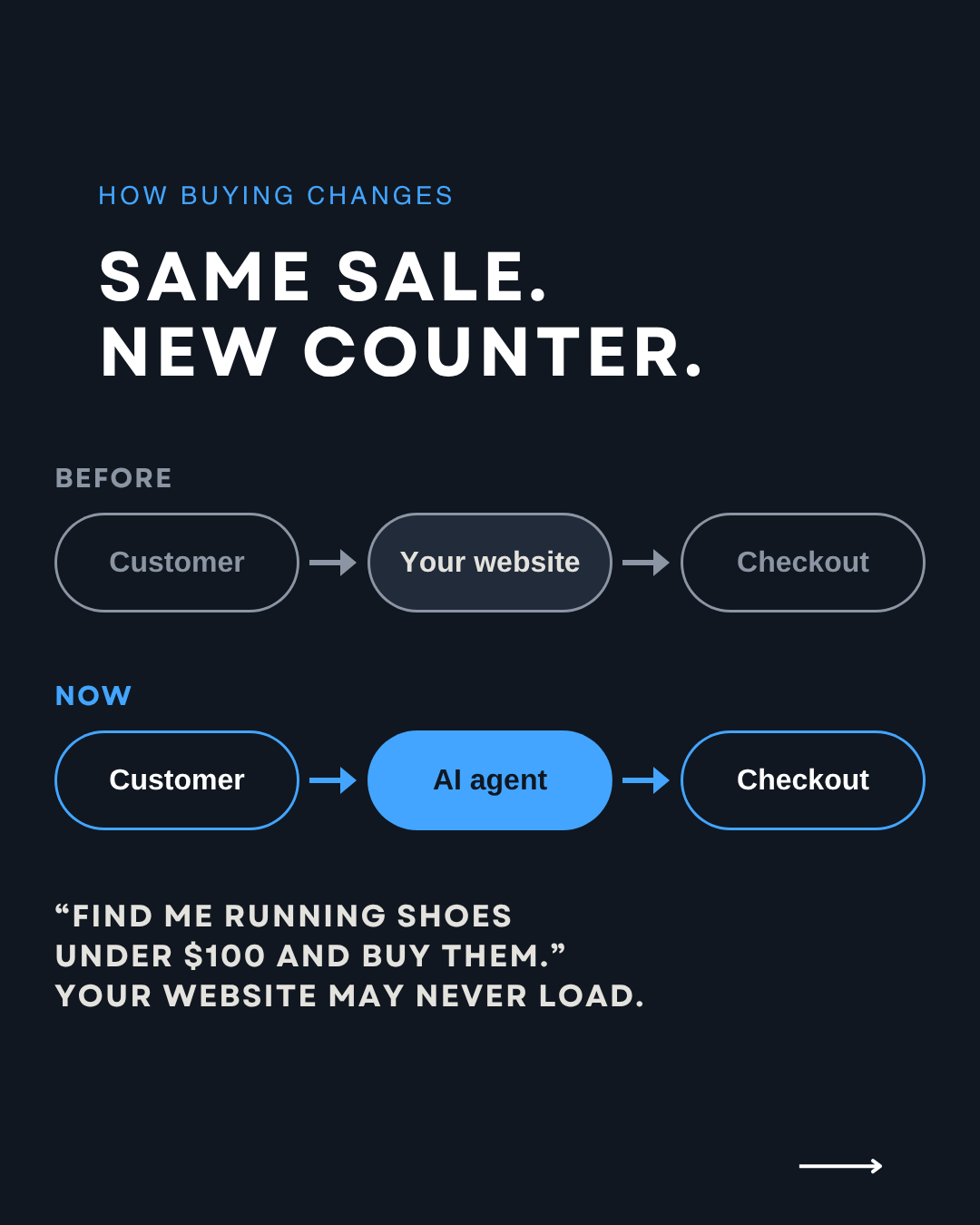
For years, the website was the finish line. Ads, search and social all pointed there, and the sale happened on your page, under your tracking, with your brand around it.
This week showed how quickly that is changing. Within three days, Google, Shopify, Meta and Amazon each made a move that pushes the purchase away from the brand site and into AI agents. If you sell online, some of these decisions are yours to make now.
What happened this week?
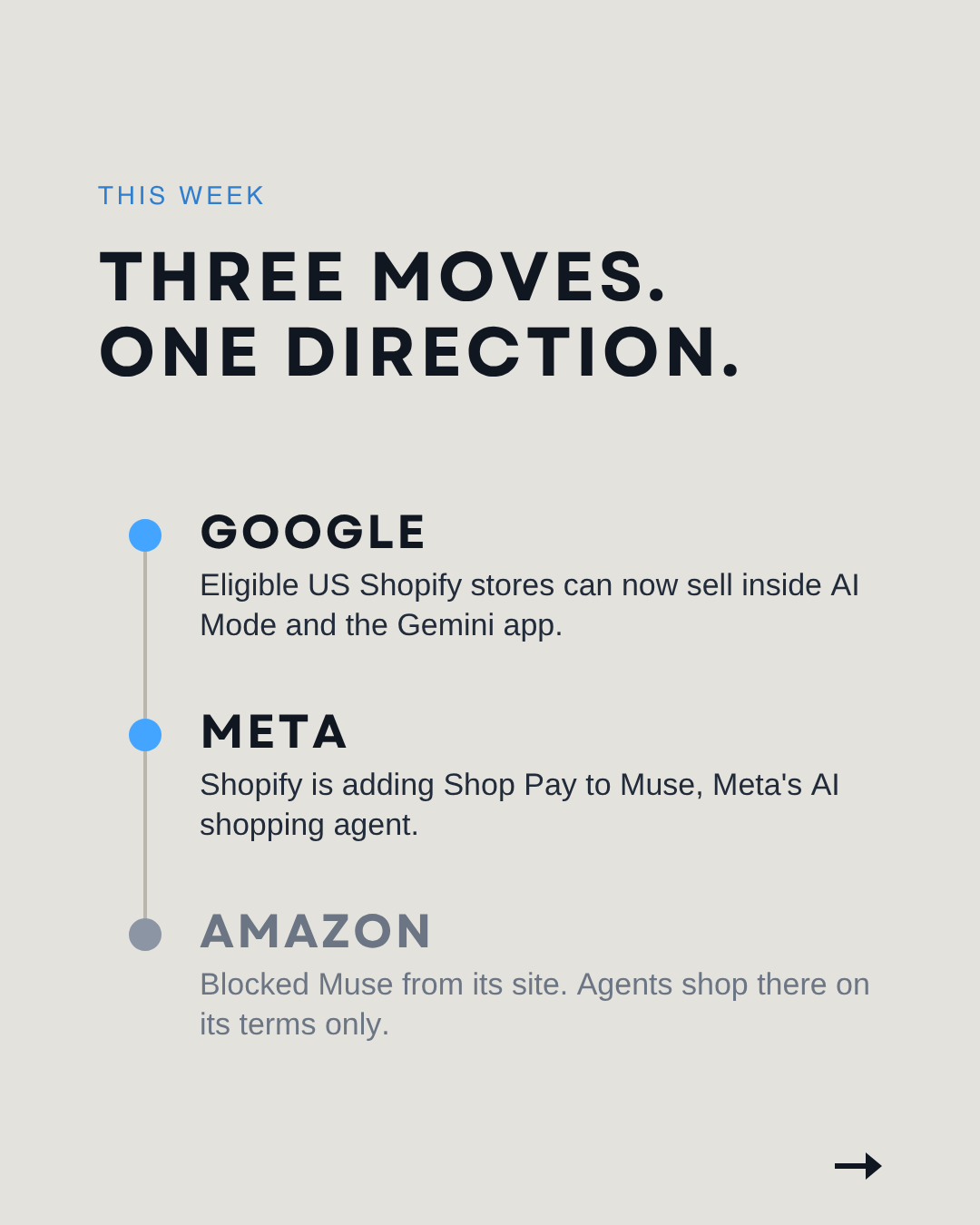
Google opens native checkout to Shopify merchants. On September 22, Search Engine Land reported that eligible US Shopify merchants selling to US customers are automatically enrolled in native checkout across Google’s AI shopping experiences. Shoppers can buy directly in AI Mode in Search and in the Gemini app. The system runs on Google’s Universal Commerce Protocol. It is on by default, and merchants can switch it off in Shopify’s sales channel settings, which sends shoppers back to the merchant’s own site.
Shopify brings Shop Pay to Meta’s Muse. The same day, PYMNTS reported that Shopify is integrating Shop Pay checkout into Muse, the AI agent Meta launched on September 8. Muse runs in its own app and inside WhatsApp. TechCrunch’s coverage of Meta Connect lists retail partners including Best Buy, Gap, Sephora, Walmart and Wayfair, with Shopify and Stripe on the payments side. Mark Zuckerberg said Meta plans to earn money from small transaction fees.
Amazon shuts the door on Muse. On September 21, GeekWire reported that Amazon now shows Muse a message saying continued access by an unauthorized AI agent violates its conditions of use. Amazon says Meta never got permission and that the agent does not identify itself. Meta says Muse has no visibility into people’s passwords or payment methods. GeekWire notes that Amazon has spent the past year blocking shopping agents from Perplexity, Google and OpenAI.
Two days later, GeekWire reported that Amazon opened its seller tools to outside AI agents, starting with Anthropic’s Claude. Sellers can now manage listings, inventory and sales analytics without going into Seller Central.
Why does this matter for your business?
Put together, the pattern is clear. AI agents are turning into storefronts, and each platform is choosing whether to welcome them or wall them off. Amazon wants agents working for its sellers, on its terms, but not shopping its catalog for a rival’s assistant. Google and Meta want the purchase to happen inside their own AI surfaces.
For a business, that raises three practical issues.
Ownership of the customer. When checkout happens inside Gemini or Muse, the platform sits between you and the buyer. You still make the sale, but the experience around it is no longer fully yours.
Measurement. Search Engine Land notes that Google’s native checkout does not support certain checkout blocks, product bundles, custom pixels or Google Analytics tracking that runs in the browser. If a meaningful share of sales moves there, your dashboards may undercount what is working.
Visibility. An agent does not browse like a person. It reads structured product information: titles, attributes, prices, stock levels. A beautiful product page with thin data is close to invisible to a machine.
Five moves to make this month
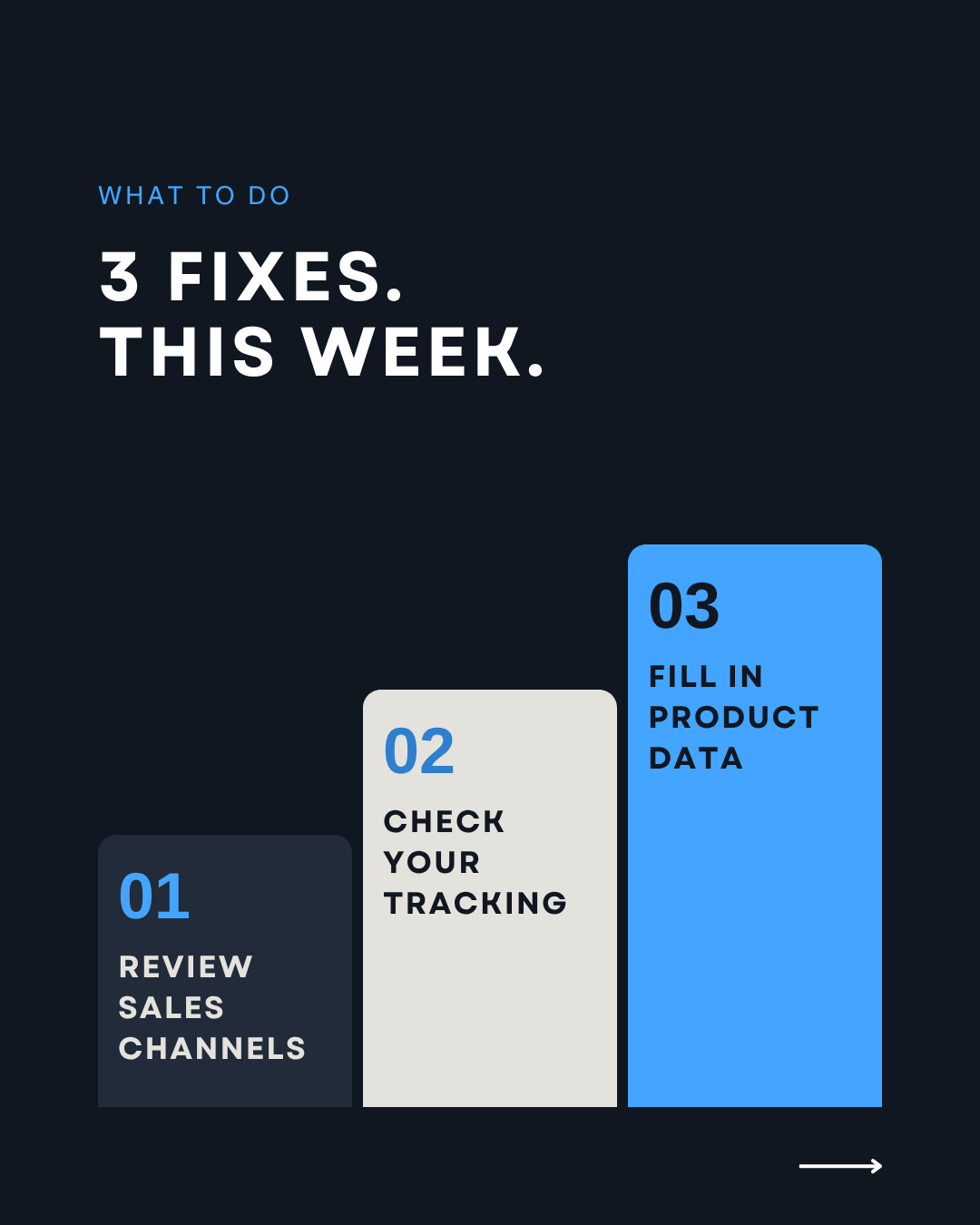
- Make the Google decision on purpose. If you are a US Shopify merchant, open your sales channel settings today. Staying enrolled may bring sales you would not otherwise reach. Opting out keeps shoppers on your site. Either can be right. Being enrolled without knowing it is not.
- Audit your tracking before volume shifts. List what your checkout pixels and analytics do today. Then decide how you will read performance if some orders happen outside your site, for example by relying on order data inside Shopify rather than browser tags.
- Treat your product feed as your shop window. Complete every attribute. Write titles that say what the product is, who it is for and its key specification. Keep stock and prices accurate. This is now copywriting for machines.
- Map your agent footprint. Write down where your customers already ask AI for help: ChatGPT, Gemini, Muse, WhatsApp. Then check which of those can actually reach your products, and through which platform.
- Protect the relationship. If an agent completes the sale, what happens after the purchase is where your brand earns the second order. Invest in packaging, onboarding emails and service.
The bigger picture
None of this replaces your website overnight. But the direction is set: discovery, comparison and checkout are moving into conversations. The brands that do well will be easy for machines to read and easy for people to trust once the product arrives.
Is your store ready for AI shoppers? Our free audit of your business will tell you, in less than 24 hours. Request it on our free audit page, or message us on LinkedIn or Instagram. For a weekly breakdown of the AI and marketing news that matters for your business, join our free weekly newsletter. You can also see how we work with brands on our services page.
Sources: Search Engine Land, “Google opens native AI checkout to eligible Shopify merchants” (September 22, 2026); PYMNTS, “Shopify brings Shop Pay checkout solution to Meta’s Muse AI agent” (September 22, 2026); GeekWire, “Amazon blocks Meta’s Muse AI assistant in new standoff over agentic shopping” (September 21, 2026); TechCrunch, “Everything new coming to Meta’s AI agent Muse” (September 23, 2026); GeekWire, “Amazon opens its seller tools to outside AI agents, starting with Anthropic’s Claude” (September 23, 2026).