Most marketing reports celebrate reach: more followers, more impressions, more people who have heard of you. A story from the UK this week is a reminder that being recognized does not pay the bills on its own. Being chosen does.
The problem with being famous
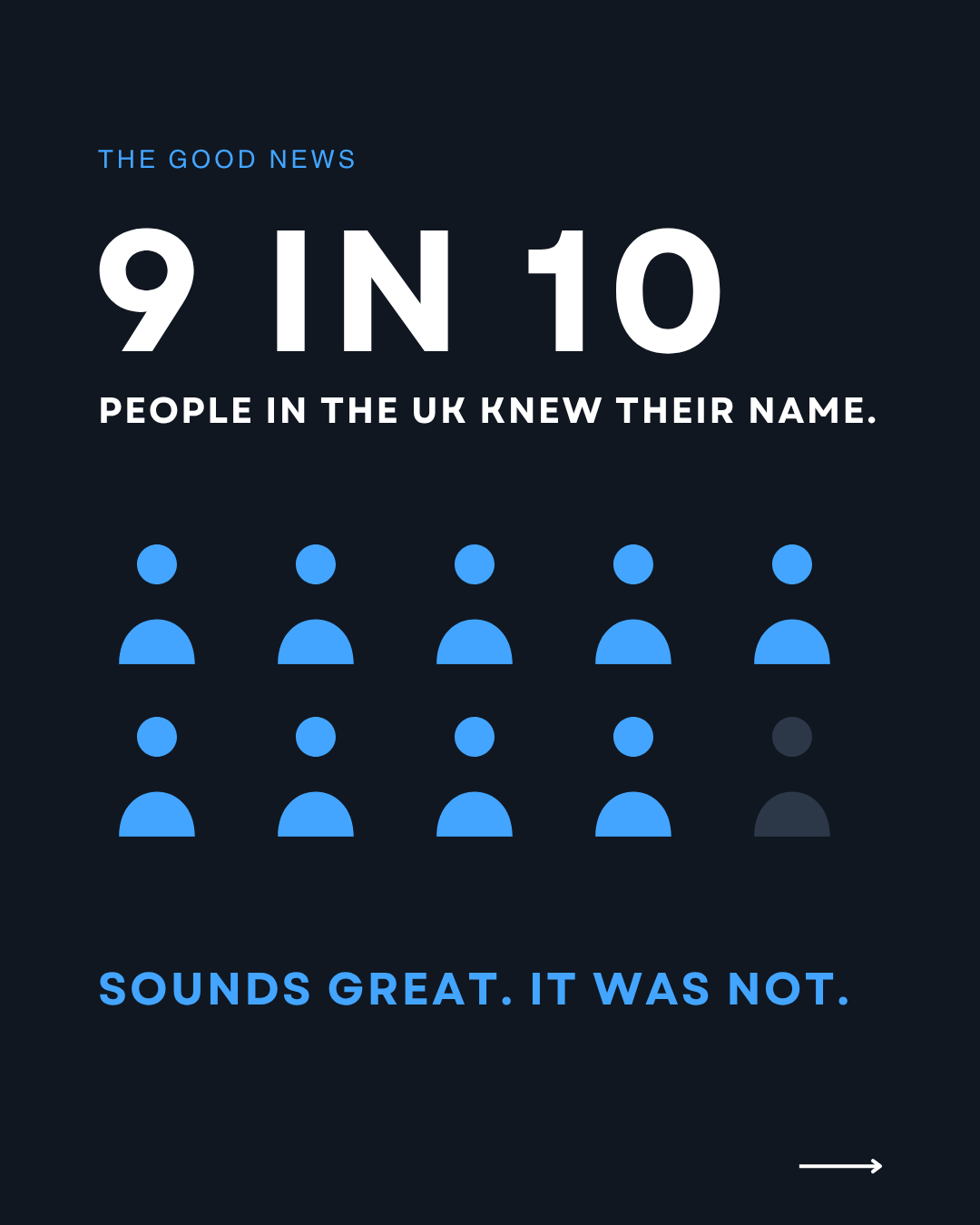
Go.Compare is a UK price comparison website. For years it ran advertising built around an opera jingle and a mascot. It worked, in one sense. According to Marketing Week, the brand’s spontaneous awareness sat in the low 90s. In plain words: when asked, about 9 in 10 people in its market could name it without being reminded.
But people found the ads irritating. And when the company looked at preference, meaning how many people would actually choose it over a competitor, the figure was, in its own words, “alarmingly low”.
That gap between being known and being chosen is common. It just rarely shows up so clearly.
What Go.Compare changed
The brand did not throw away what made it recognizable. It used the mascot less, but kept distinctive cues such as the moustache, so people still knew who was talking.
It also changed how it buys and plans its ads. It now treats video, whether TV, YouTube, Netflix or Sky, as one channel, instead of separate silos. And it added sponsorships in places where its audience already spends time and feels good: the TV show This Morning, The Voice UK and the Welsh Rugby Union.
Finally, it changed the scoreboard. Instead of judging marketing only on short term return, it now builds long term preference into its econometric models, the statistical tools that estimate what each marketing activity contributes.
What the results show
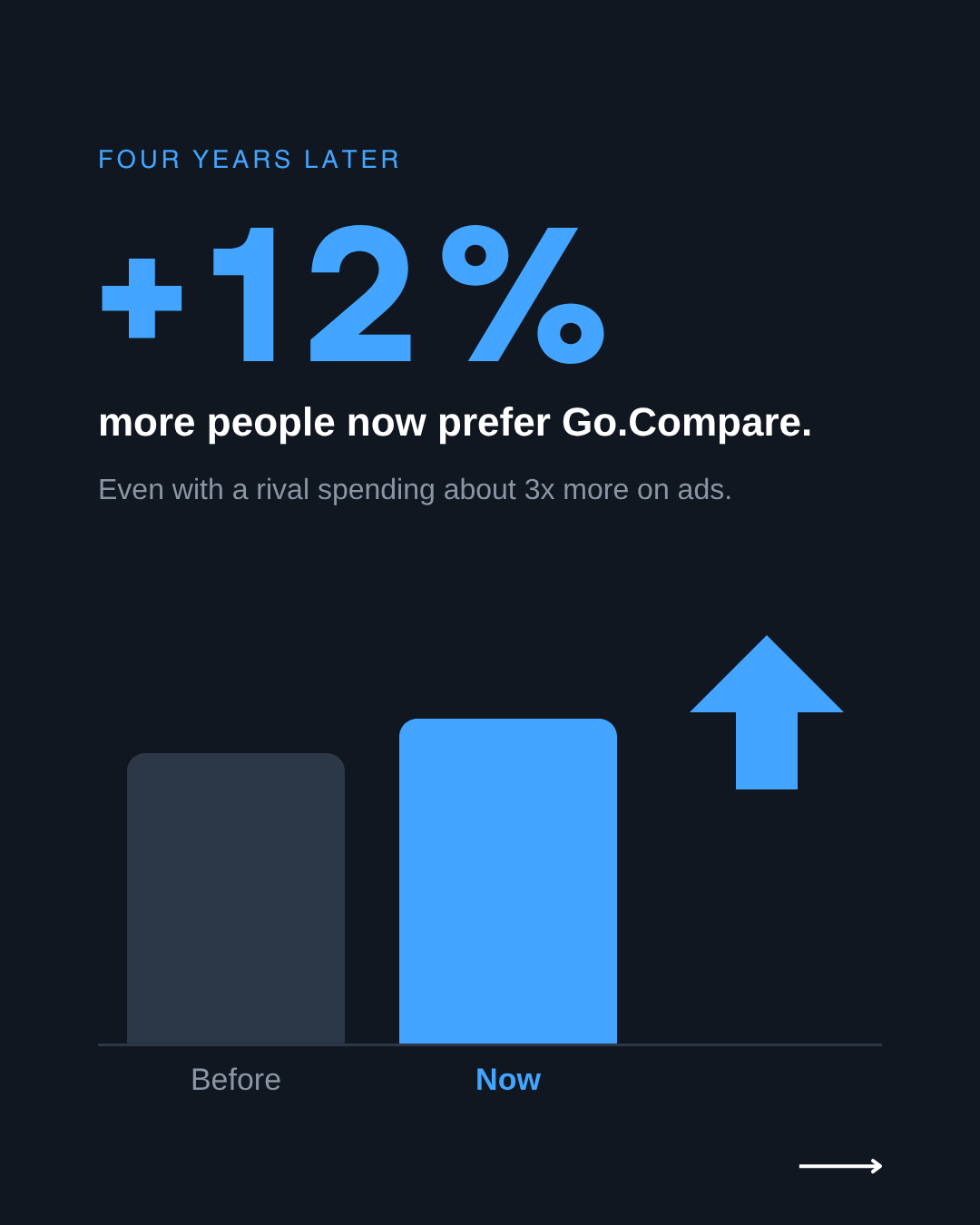
Marketing Week reports that preference for Go.Compare rose 12% over four years, with revenue growing year on year. That happened while its main rival, Compare the Market, spends roughly three times as much on media. With a smaller budget, Go.Compare said it has to make every appearance memorable.
How a small business can measure preference
You do not need econometric models to apply this lesson. A few simple signals tell you whether people choose you:
- Branded search: how many people search for your business by name each month.
- Direct enquiries: customers who contact you without being prompted by an ad.
- Win rate: of the quotes or proposals you send, how many you win.
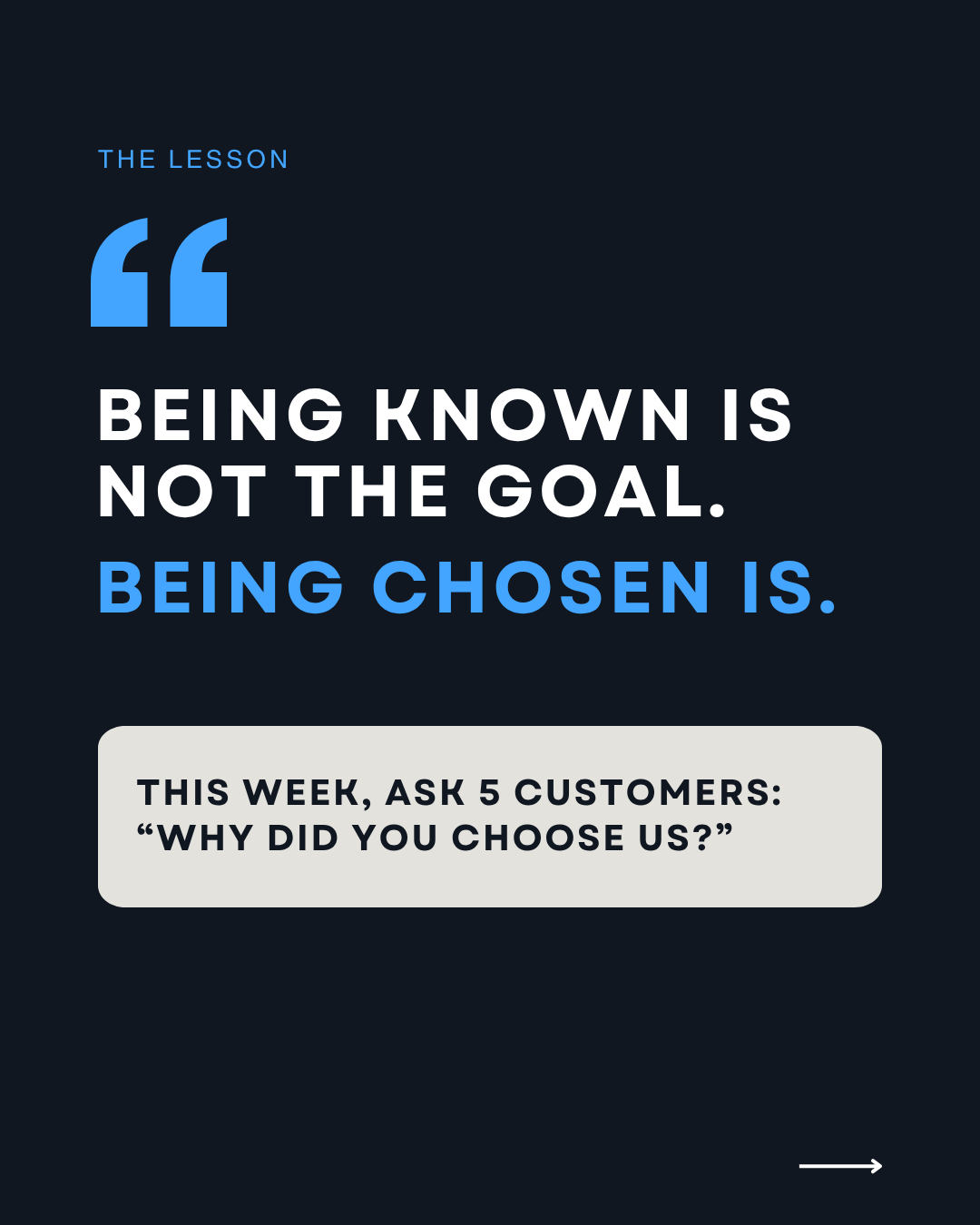
- Customer answers: ask new customers one question, “Why did you choose us?”, and write the answers down.
If these numbers stay flat while your followers grow, more people know you, but no more people are choosing you.
Three moves to make this quarter
- Audit your recognizable cues. Your colors, a phrase you always use, a format your audience knows. Keep them consistent.
- Remove the friction. Look at the content or ads that get attention but also complaints, unfollows or eye rolls. Being memorable for the wrong reason costs you.
- Show up where people feel good. Partnerships, local events, communities and collaborations can build preference faster than another round of ads.
Being chosen is the goal
The businesses that grow steadily are rarely the loudest. They are the ones people pick when it is time to buy.
Want to find out how your brand is perceived? At 33 Genesis Road, we offer a free audit of your business, delivered in less than 24 hours. Request it on our free audit page, or message us on LinkedIn or Instagram. For more lessons like this one, join our free weekly newsletter. You can also see how we build brands on our services page.
Source: Marketing Week, “Go.Compare on evolving beyond ‘irritating’ advertising to drive preference” (September 25, 2026).